Museo de Málaga
State museum under Andalusian management in the Palacio de la Aduana, with the Fine Arts and Archaeology collections of Málaga and more than 15,000 pieces.
Have only individual sections read aloud
About the museum
The Museo de Málaga was founded in 1972 from the merger of the Provincial Museum of Fine Arts, open to the public since 1916, and the Provincial Archaeological Museum, created in 1945 with finds from the reconstruction of the Alcazaba. It is one of the State-owned museums whose management was transferred to the Junta de Andalucía, in this case in 1984. Between 1996 and 1997 its two former seats were closed, including the Palacio de los Condes de Buenavista, which went on to house the Museo Picasso Málaga.
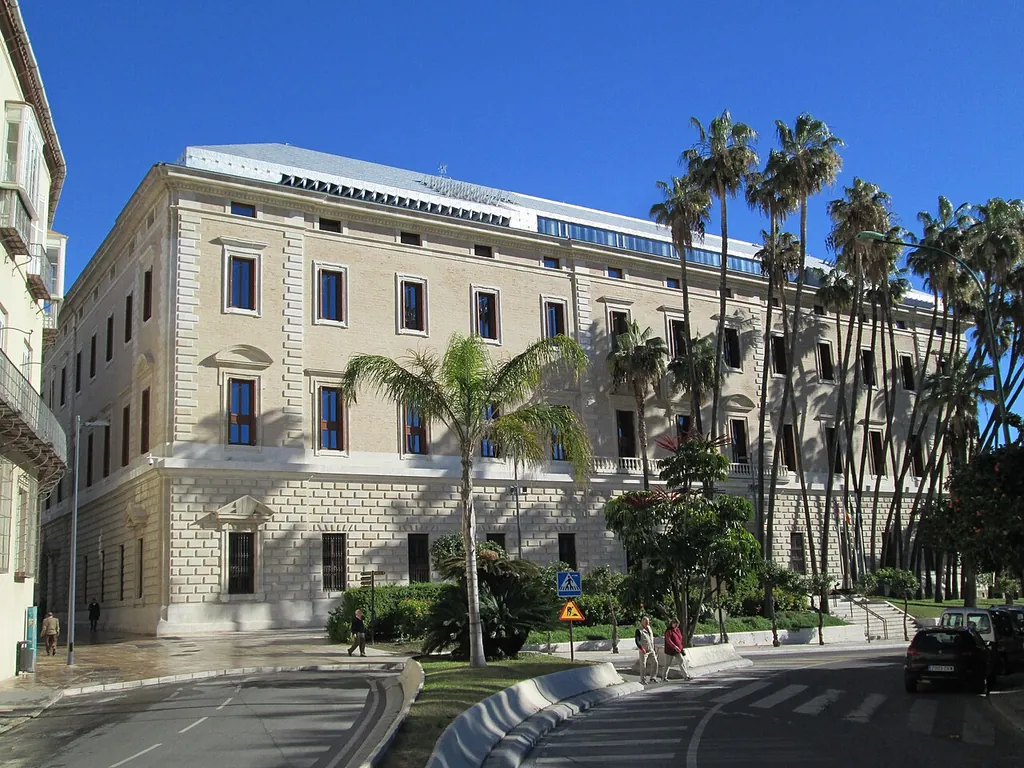
The current seat is the Palacio de la Aduana, a neoclassical building designed in 1787 by Manuel Martín Rodríguez and completed in 1829. After a fire in 1923 it lost its roof and was then used as an administrative seat until 2008. A broad citizen campaign, under the slogan “La Aduana para Málaga”, called for its use as a museum, which was agreed in 2005. The renovation, by Fernando Pardo, Bernardo García Tapia and Ángel Pérez Mora, created a museum of 18,402 m², the largest State-owned museum in Andalusia, which opened to the public on 12 December 2016.
The museum holds more than 15,000 pieces. The Fine Arts section was formed with deposits from the Real Academia de San Telmo and the Prado and Reina Sofía museums, and with donations from artists and collectors. The Archaeology section derives from the former Museo Loringiano and the excavations of the Alcazaba, with a notable collection of Hispano-Muslim archaeology, as well as Phoenician and Roman materials.
Highlights
- Palacio de la Aduana, an 18th-century neoclassical building
- Fine Arts and Archaeology collections in one building
- Hispano-Muslim archaeology from the Alcazaba of Málaga
- Phoenician and Roman materials from the province
- Free admission for EU citizens
Permanent exhibitions
- Colección permanente de Bellas Artes – Painting and sculpture from the deposits of the Real Academia de San Telmo and the Prado and Reina Sofía museums, and from donations by artists and collectors.
- Colección permanente de Arqueología – Pieces from the former Museo Loringiano and from the Alcazaba excavations, including Hispano-Muslim archaeology, and from Phoenician and Roman sites in the province.
- Founded
- 1972
- Operated by
- Junta de Andalucía (Consejería de Cultura y Deporte); museo de titularidad estatal
Admission & discounts
| Adults | €1.50 |
|---|---|
| Groups (10+ people) | –Groups are considered to be from 10 people up to a maximum of 30. Group visits are not guided. |
Admission is free for accredited citizens of the European Union; other nationalities pay €1.50. The Department of Culture and Sport offers a booking platform for visits.
Accessibility
- Wheelchair accessible
- Elevator
- Accessible restroom
- Accessible parking: no information
- Service dogs welcome: no information
- Tactile models & exhibits: no information
- Sign language tours: no information
- Easy-to-read materials: no information
- Audio description: no information
The museum has lifts, adapted toilets and wheelchairs, which can be requested at the ticket office or from any of the attendants. There are rest areas.
Kids & families
The museum has a nursing room.
Getting there & parking
By public transit
Paseo del Parque
City bus: Paseo del Parque stop, lines 1, 3, 4, 11, 14, 16, 19, 25, 32, 33, 34, 35, 36, E, C1, C2, N1 and N2. Nearby taxi ranks: Cortina del Muelle, Plaza de la Merced and Plaza de la Marina. málagabici station on Travesía Pintor Nogales.
By car
Nearest public car parks: Plaza de la Marina and Alcazaba. The nearest parking for motorcycles, bicycles and scooters is on Avenida de Cervantes.
Amenities & dining
- Café
- Restaurant
- Coat check
Bloom café and Blossom restaurant. Left-luggage facility and nursing room. The shop is temporarily closed.
Events & venue rental
The museum hasn’t published any information on this.
Plan your visit
| School programs | yes |
|---|---|
| Good to know | Group visits are not guided. The museum offers an educational programme with guided school visits and two thematic itineraries: “ELLAS. Páginas en femenino en la colección de Arte” and “Pintar el entorno. La pintura de paisaje”. |