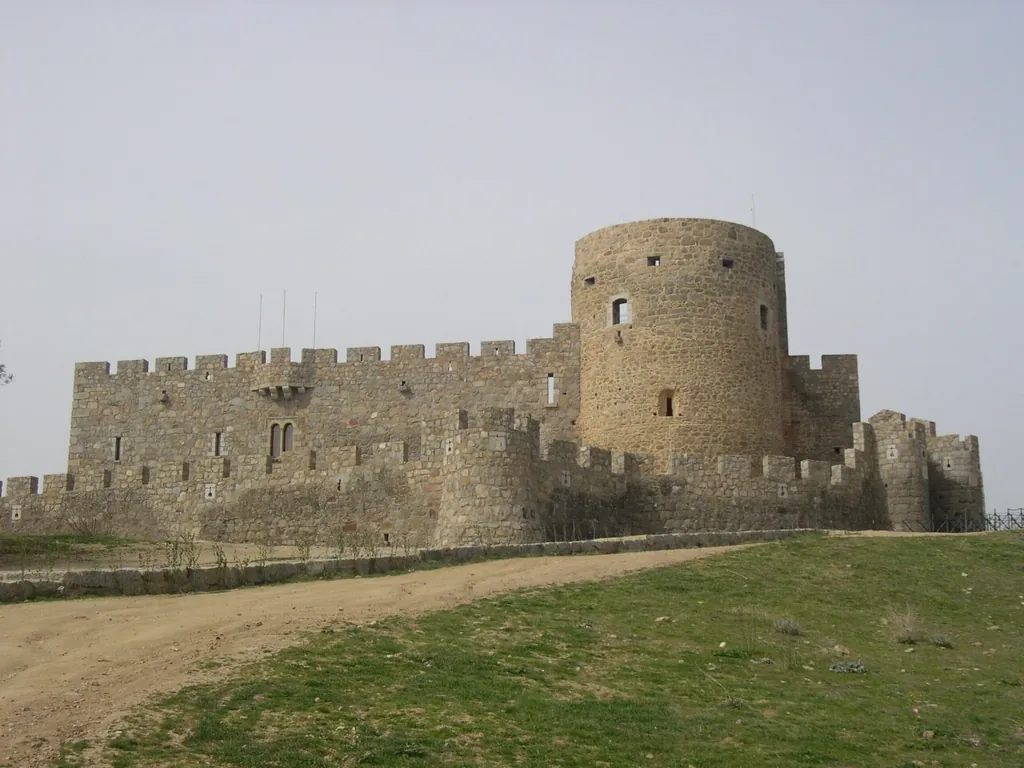
Castillo de La Adrada. Centro de Interpretación Histórica Valle del Tiétar
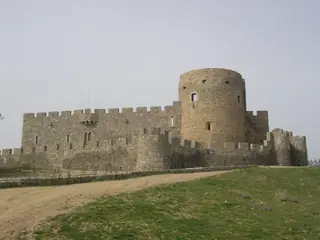
Castle-fortress of La Adrada, built around a Gothic church, with an interpretation centre on the history of the Tiétar Valley.
Have only individual sections read aloud
About the museum
The castle of La Adrada grew out of a parish church with a basilican plan and three naves, dating from around 1250, with a semicircular apse in the transition between Romanesque and Gothic. A tower was added beside the apse in 1309. When Henry III granted La Adrada the title of villa in 1393, the constable Ruy López Dávalos transformed the church into a fortress: the door was walled up, the bell tower was demolished, the keep (torre del Homenaje) was built over the apse, and the enclosure was surrounded by an outer wall (falsabraga), towers and defensive bastions.
In the 15th century a courtyard of arms (patio de armas) in Castilian style was built and the defences were reinforced with a large artillery bastion. After the fall of Álvaro de Luna in 1453, the fortress passed through several noble houses, among them the Cueva family, who held it as a marquisate until the 16th century, when it became a Renaissance palace with arcaded galleries. It later belonged to the Montijo family and, from the mid-19th century, to the House of Alba. It deteriorated for much of the 20th century and was restored at the beginning of the 21st century, with archaeological excavations between 2000 and 2004.
The Centro de Interpretación Histórica del Valle del Tiétar (Tiétar Valley Historical Interpretation Centre), opened in 2004 after the restoration, occupies twelve rooms. With models, graphic panels, reproductions of objects and weapons, photographic displays and an audiovisual, it traces the history of the valley from prehistory to the present day: the Vettones, the Romans, the Visigoths, the Muslim world, the medieval lordships and traditional rural life. The route is completed by a permanent exhibition of ceramic and stone pieces found in the castle’s excavations.
Highlights
- Gothic church of the 13th century built into the fortress, with stonemasons’ marks
- 15th-century courtyard of arms with an arcaded gallery
- Casa del Alcaide (governor’s house) with a mudéjar tile dado
- Keep and barbican tower (torre albarrana) with views over the Tiétar Valley
- Twelve rooms on the history of the valley, from the Vettones to today
- Ceramic and stone pieces from the castle’s excavations
Permanent exhibitions
- Centro de Interpretación Histórica Valle del Tiétar – Twelve rooms with models, panels and an audiovisual on the history of the valley, from the Vettones to traditional rural life.
- Piezas de las excavaciones del castillo – Permanent exhibition of ceramic and stone pieces recovered in the excavations carried out during the reconstruction of the castle between 2000 and 2004.
- Founded
- 2004
Admission & discounts
| Adults | €3 |
|---|---|
| Reduced | €2Unemployed people, pensioners, large families, people with disabilities, schoolchildren and children aged 6 to 17 (with accreditation); according to another source, also groups of more than 25 people |
| Children & teens | €2free up to age 5 · Under 6: free; ages 6 to 17: reduced rate. |
| Seniors | €2Pensioners. |
| Visitors with disabilities | €2 |
Free admission: On Wednesdays, admission is free for all visitors. Also free for residents registered in La Adrada.
Admission includes the castle and the Tiétar Valley Historical Interpretation Centre.
Accessibility
The museum hasn’t published any information on this.
Kids & families
| Time needed | approx. 45 min |
|---|---|
| Kids’ admission | free up to age 5 |
Getting there & parking
The museum hasn’t published any information on this.
Amenities & dining
The museum hasn’t published any information on this.
Events & venue rental
The museum hasn’t published any information on this.
Plan your visit
| Good to know | The visit lasts about 45 minutes. Group bookings are made on 690 873 136. |
|---|