Gustav III:s paviljong
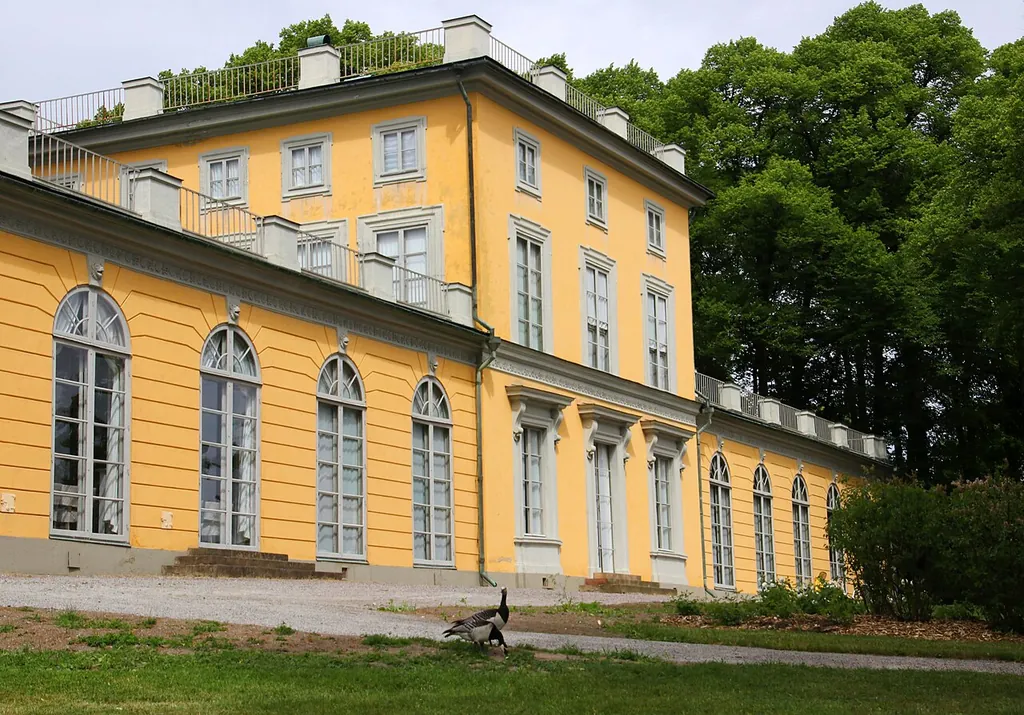
Gustav III's summer palace in Haga Park from 1787–1792, decorated in Pompeian style by Louis Masreliez and open for guided tours.
Have only individual sections read aloud
About the museum
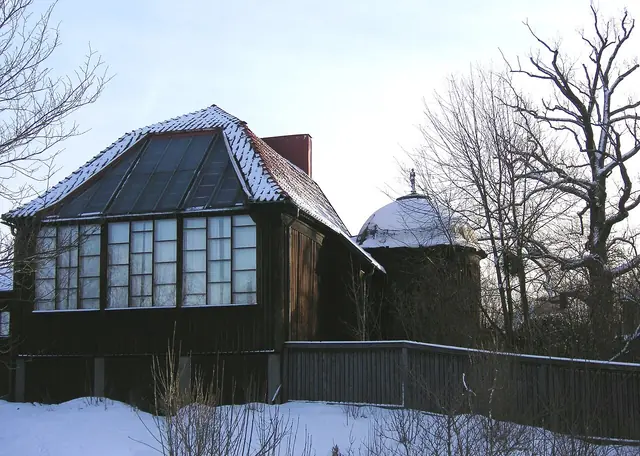
Gustav III:s paviljong (Gustav III's Pavilion), often called Haga's little palace, was built in 1787–1792 to designs by the architect Olof Tempelman, to whom the king personally gave detailed instructions. The building was erected around the older Stenhuset (stone house) in the Brahelund area, which Gustav III had bought in 1785, and it became the king's refuge in troubled times. The pavilion was part of his grand visions for Haga Park, and many of them never got further than the drawing board.
Louis Masreliez was engaged for the interior. He had studied ancient Roman art in Italy and became a trendsetter. The state apartment was decorated in a so-called Pompeian manner, inspired by the excavations of Pompeii and Herculaneum, with, among other rooms, the Spegelsalongen (Mirror Salon), the Blå förmaket (Blue Antechamber) and the Divanen (Divan Room). The interior, with its wealth of detail, broke with the more restrained interiors of the time.
Gustav III had only a few years of use of the summer palace; from here he set off for the fateful masquerade ball at the Opera in March 1792. Although parts of the interior were altered during the 19th and 20th centuries, the pavilion is today one of the foremost examples of Gustavian architecture and interior design, and since 1934 a listed building of national interest (statligt byggnadsminne).
Highlights
- Pompeian state apartment by Louis Masreliez
- The Spegelsalongen (Mirror Salon), the Blå förmaket (Blue Antechamber) and the Divanen (Divan Room)
- Gustav III's summer palace from the 1790s in Haga Park
- Guided tours are included in the entrance ticket
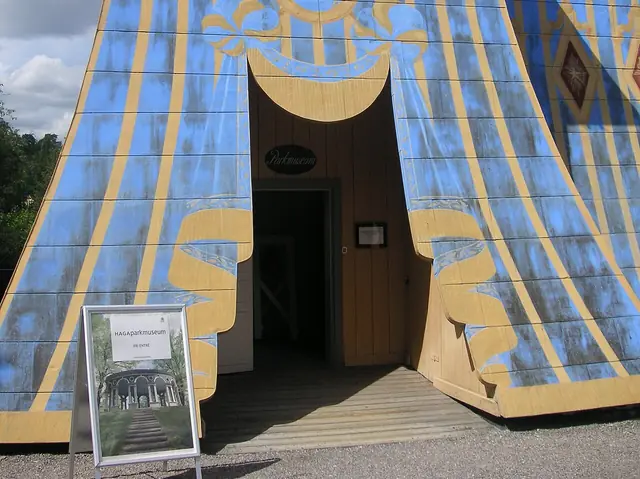
- Next to the Haga Park Museum in the Koppartälten (Copper Tents)
Permanent exhibition
- Paviljongens salar – The state apartment is decorated in Pompeian style under Louis Masreliez and shows the high quality of Gustavian interior art.
- Operated by
- De Kungliga Slotten / Statens fastighetsverk
Admission & discounts
| Adults | SEK 140 |
|---|---|
| Reduced | SEK 120Students |
| Children & teens | SEK 70free up to age 6 · Children aged 7–17 pay SEK 70; children under 7 enter free. |
| Visitors with disabilities | freecompanion free · A companion or assistant to a visitor with a disability enters free. |
| Students & apprentices | SEK 120 |
| Kungliga slottens årskort (season pass for the Royal Palaces) | SEK 500 |
The guided tour is included in the entrance ticket. Tickets are sold at the pavilion's entrance shortly before the tour. The Kulturarvskortet (Cultural Heritage Card) gives a 50% discount.
Accessibility
- Partially wheelchair accessible
- Elevator: not available
- Accessible restroom
- Accessible parking: no information
- Service dogs welcome
- Tactile models & exhibits: no information
- Sign language tours: no information
- Easy-to-read materials: no information
- Audio description: no information
There is no lift. The lower floor is accessible to wheelchair users via a ramp between the entrance and the lower floor, but not the upper floor, because of a narrow and steep staircase. There is no toilet at the palace; an accessible toilet is at the Koppartälten. Assistance dogs are allowed; other pets are not.
Kids & families
| Kids’ admission | free up to age 6 |
|---|
- Stroller-friendly: not available
Pushchairs cannot be taken into the palace. Children under 7 enter free.
Getting there & parking
By public transit
Haga norra · 750 m
Bus to Haga norra and from there about 750 metres on foot; follow the signs towards Gustav III:s paviljong. Search for “Haga Gustav IIIs paviljong, Solna” on sl.se.
By car
Parking available · 750 m to the entrance
Gravel car park about 750 metres from the pavilion.
By car from the E4, take exit 167 towards Hagaparken. There are pleasant cycle paths in Haga Park.
Get directionsAmenities & dining
- Café
- Museum shop
- Coat check
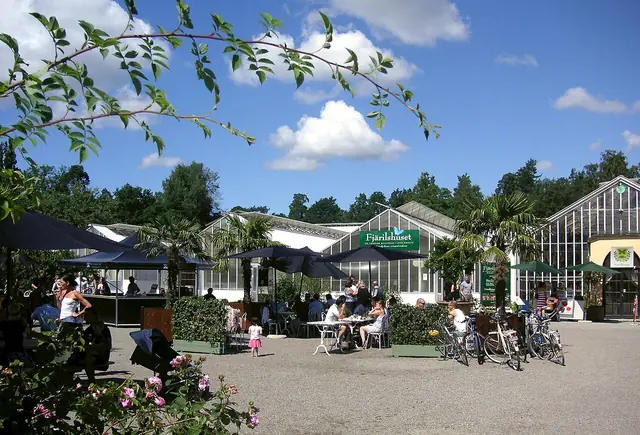
There is a café in the Koppartälten (Haga Park Museum). Souvenirs are sold at the pavilion. Larger bags, backpacks and umbrellas are left at the designated place in the entrance.
Events & venue rental
The museum hasn’t published any information on this.
Plan your visit
| Guided tours | yes · approx. 45 min |
|---|---|
| Photography | Photography and filming for private use are allowed without flash, tripods, selfie sticks, 360-degree cameras or drones. |
| Good to know | Visits take place in connection with guided tours for individual visitors; groups should book in advance (tours can be given in several languages). The app Kungliga promenader gives free guidance in Haga Park. |