Hallsbergs gård och stenar
Local heritage and farming museum on a preserved farm in Skåne in Lövestad, with the Möllehuset and the remarkable stone garden Hallsbergs stenar.
Have only individual sections read aloud
About the museum
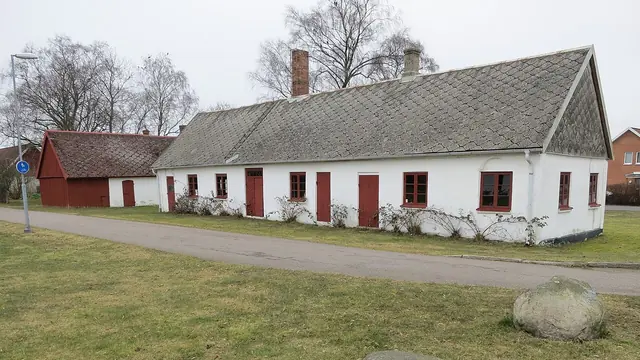
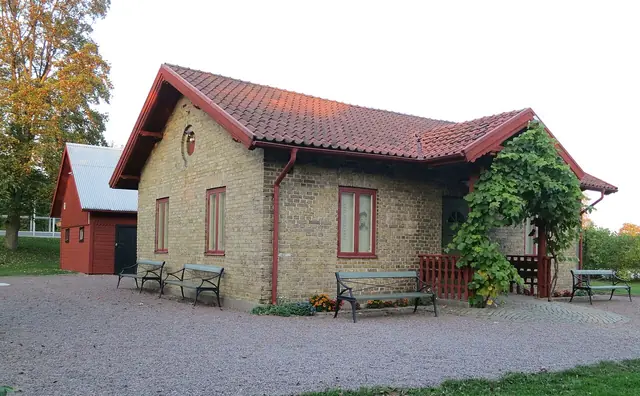
The farm Heinge 9 was moved out of Heinge village to Hallsberg when the enclosure (enskifte) was carried out in 1825. Four generations of the Nilsson family farmed the farm. In 1971–1972 Dorothea Nilsson, the last living of four siblings, gave the farm to Färs Härads hembygdsförening (Färs Hundred local heritage association), which restored it and set it up as a museum.
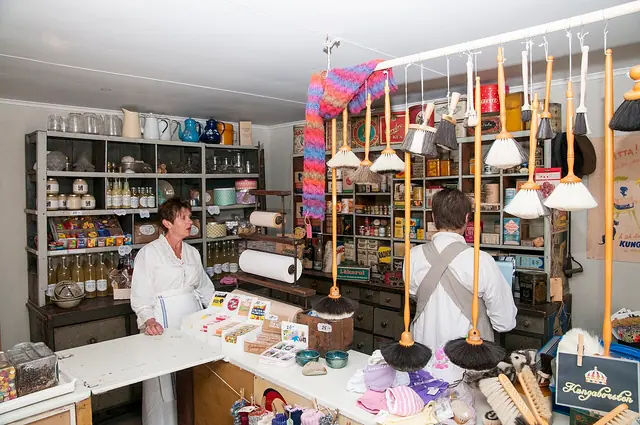
The museum comprises Hallsbergs gård (Hallsberg farm) and the outbuilding Möllehuset (the Mill House) with Hallsbergs stenar (the Hallsberg stones). The dwelling houses contain furniture, household goods, textiles and costumes, and the furnishings in the dwelling house come from the Nilsson family. In the loge (open shed) and the stable, agricultural machines, horse carts, tools and belt-driven woodworking machines from the 1920s are shown. In the loft there are crafts such as saddle-making, clog-making, shoemaking and tools for flax processing and weaving, as well as a school environment and a general store interior.
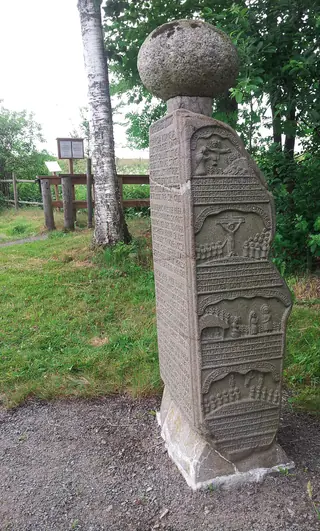
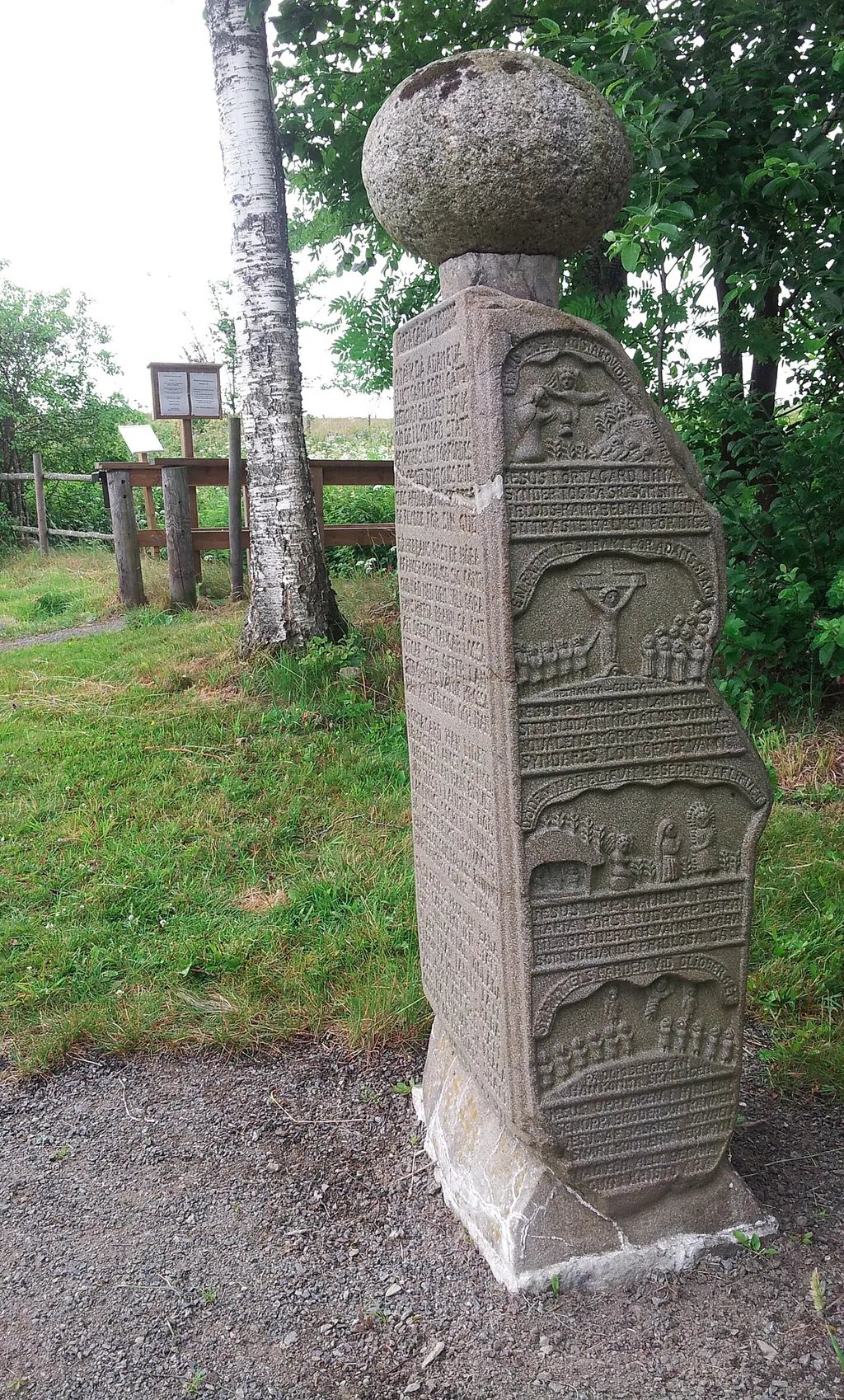
The name Hallsberg suggests that the land was stony. The farmer and miller Nils Nilsson (1818–1896) broke stone from the fields and arranged a collection of thirteen naturally shaped blocks in the garden by the Möllehuset. He carved pictures and inscriptions with biblical motifs, mainly with simple chisel marks, and wanted to imitate paradise, with the mill brook as the Jordan River. The Möllehuset was built in 1873 next to the mill pond, where the remains of a mill wheel from 1849 still exist.
Highlights
- Hallsbergs stenar, thirteen blocks with carved pictures and inscriptions
- Möllehuset and the mill pond with remains of the watermill
- Agricultural machines, horse carts and belt-driven woodworking machines
- School environment, general store and crafts tools in the loft
- The mill garden with about 150 named plants
Permanent exhibitions
- Hallsbergs gård med lantbruksmuseum – Furnished dwelling houses, agricultural machines, horse carts, crafts, a school environment and a general store in the preserved farm.
- Hallsbergs stenar – Thirteen blocks in the mill garden with carved pictures and inscriptions with biblical motifs.
- Operated by
- Färs Härads Hembygdsförening
Admission & discounts
The museum hasn’t published any information on this.
Accessibility
- Partially wheelchair accessible
- Elevator: no information
- Accessible restroom: no information
- Accessible parking: no information
- Service dogs welcome: no information
- Tactile models & exhibits: no information
- Sign language tours: no information
- Easy-to-read materials: no information
- Audio description: no information
The staircase to the front door of Hallsbergs gård was made accessible in autumn 2022 for wheelchair users and visitors with disabilities. The path to the stones is a gravel road.
Kids & families
The museum hasn’t published any information on this.
Getting there & parking
By car
Parking available
Parking for cars and buses is at Hallsberg, directly after the barrier in front of the gravel road that leads to the stones.
The farm is just over 500 metres east of Heinge village and about 10 km north-east of Sjöbo. Follow road 11 Sjöbo–Tomelilla and then the white signposts “Hembygdsmuseum” towards Heinge.
Get directionsAmenities & dining
The museum hasn’t published any information on this.
Events & venue rental
The museum hasn’t published any information on this.
Plan your visit
| Guided tours | yes |
|---|---|
| Good to know | Guided groups are booked with the association, telephone +46 73 827 57 05. A film from 1997 by Ulf Gertz shows a tour among the stones. |