Muzej likovnih umjetnosti u Osijeku
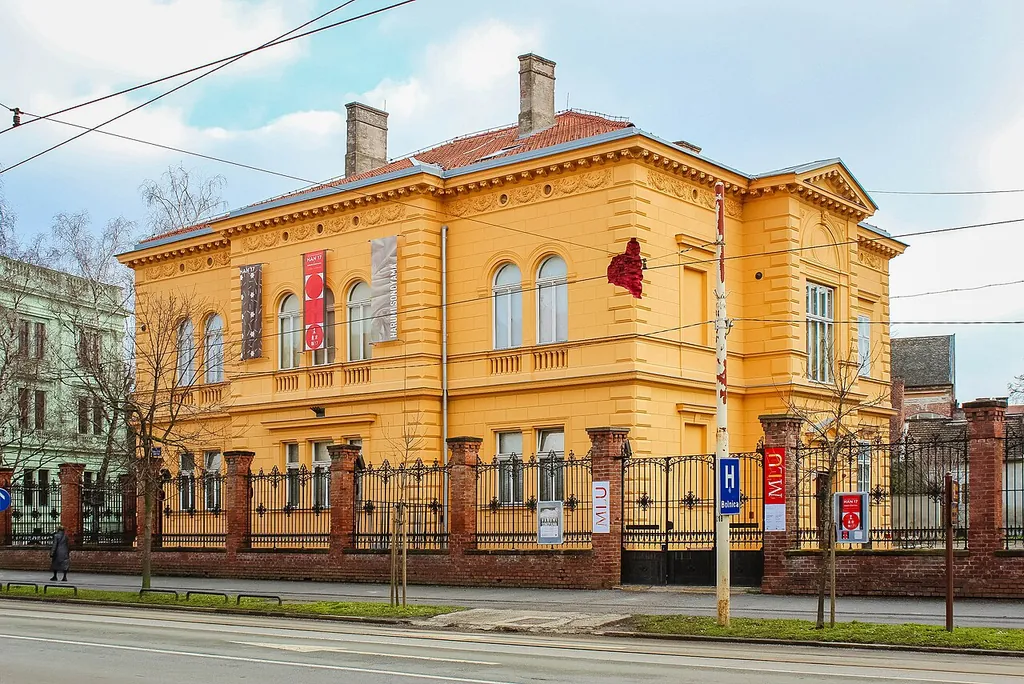
Museum in the Secession-style Europska avenija (European Avenue) preserving painting, graphic art and sculpture from the Baroque to the present, including works from the collections of Slavonian noble families.
Have only individual sections read aloud
About the museum
The Muzej likovnih umjetnosti (Museum of Fine Arts) grew out of a collection of paintings that the Muzej Slavonije (Museum of Slavonia) assembled after the Second World War by taking over collections from manor houses in the Osijek surroundings. The first independent gallery display was organised in 1948, and in 1954 the Galerija slika (Picture Gallery) was separated from the Museum of Slavonia and became an independent institution. After many years without permanent premises, the collection found a home in the building at Europska avenija 9, where the Galerija likovnih umjetnosti (Gallery of Fine Arts) opened in 1964. It has borne the name Muzej likovnih umjetnosti since 2014.
The building was erected in 1895 to a design by the architect Josip Vancaš as the family house of the lawyer Dragutin Neumann. The neo-Renaissance façade with its terracotta frieze and wrought-iron railing is part of the representative row of historicist and Secession buildings along Europska avenija, which links the Upper Town (Gornji grad) and Tvrđa. Before it was assigned to the gallery in 1963, the building served as a family house, residential space and a students’ hostel.
The holdings comprise paintings, drawings, graphic art, sculptures and medals from the 18th, 19th, 20th and 21st centuries. The most valuable part is the collection of paintings, unique in Croatia for its works owned by Slavonian noble families, alongside works by Osijek artists, mostly from the first half of the 20th century. The museum organises the Slavonski biennale (Slavonian Biennale), the Memorijal Ive Kerdića (Ivo Kerdić Memorial) – a triennial of Croatian medal art and small sculpture, and the Dani grafike (Days of Graphic Art).
Highlights
- Paintings from the collections of Slavonian noble families, among them works by foreign masters of the Baroque, Classicism and Romanticism
- Works by Osijek painters, especially from the first half of the 20th century
- Neo-Renaissance building of Josip Vancaš on Europska avenija
- Slavonski biennale and Memorijal Ive Kerdića
- Collection of plaques and medals
Permanent exhibition
- Stalni postav Muzeja likovnih umjetnosti – The permanent display presents a selection from the holdings by century: painting and graphic art of the 18th and 19th centuries, and art of the 20th and 21st centuries.
- Founded
- 1954
- Operated by
- Muzej likovnih umjetnosti Osijek (javna ustanova)
Admission & discounts
| Adults | €10 |
|---|---|
| Reduced | €6pupils, students and pensioners |
| Children & teens | €6free up to age 6 · Pupils; children under 7 years do not pay for admission. |
| Seniors | €6Pensioners. |
| Students & apprentices | €6 |
| Groups | €8 per personTourist group of up to 10 people, price per person. |
| Families | €12Family ticket. |
| Expert-led tour for groups (up to 10 people) | €1Surcharge of €1 per person on top of the admission price; advance booking required. |
Accessibility
The museum hasn’t published any information on this.
Kids & families
Great for kids & families
| Kids’ admission | free up to age 6 |
|---|---|
| Family ticket | €12 · Family ticket. |
- Family tours & workshops
- Activity booklet, scavenger hunt or kids’ audio guide
Since 2006 the museum has run pedagogical programmes and art workshops for children and young people, publishes an educational leaflet and an activity book for children, and offers a family ticket.
Getting there & parking
The museum hasn’t published any information on this.
Amenities & dining
The museum hasn’t published any information on this.
Events & venue rental
The museum hasn’t published any information on this.
Plan your visit
| Guided tours | yes |
|---|---|
| School programs | yes |
| Good to know | An expert-led tour for groups of up to 10 people is arranged by advance booking. The permanent display is occasionally taken down because of larger exhibitions. |