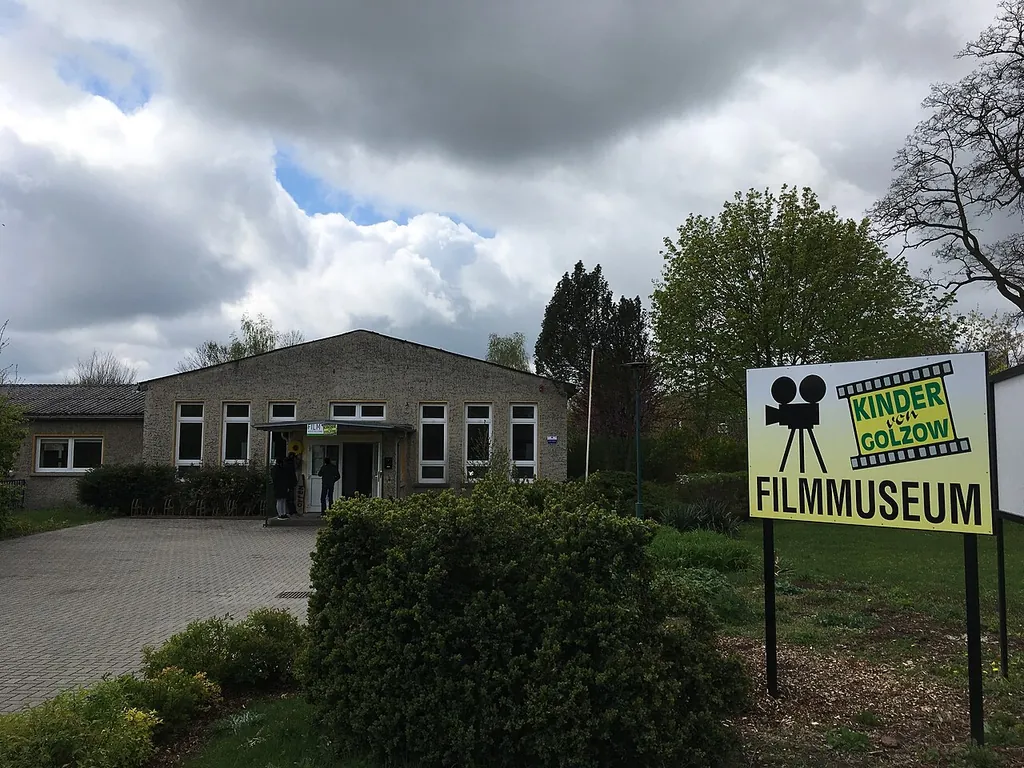
Filmmuseum Kinder von Golzow
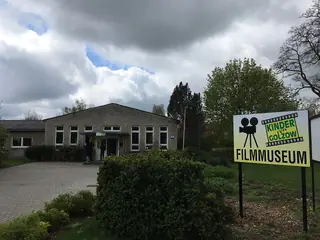
Museum in Golzow about the long-term documentary "Die Kinder von Golzow" (The Children of Golzow), with an exhibition, a cinema and a replica editing room.
Have only individual sections read aloud
About the museum
Starting in 1961, the filmmakers Winfried and Barbara Junge followed a school class from Golzow in the Oderbruch region from the children's first day of school. By 2005 this produced 19 films with a total running time of about 42.5 hours, one of the longest documentaries in film history, which also captures a slice of everyday life in the GDR, the Wende period and the years that followed.
The idea for the museum came in 1998 to the then mayor, Christian Dorn, at the Berlinale premiere of one of the films. The association "Golzower für Golzow", founded in 1997, took over sponsorship; support came, among others, from the DEFA Foundation, the Sparkassen Foundation and the municipality. The permanent exhibition opened on September 8, 2000 in a classroom of the local school, was expanded in July 2008 into a museum in new premises, and was redesigned in 2014.
On display are photos, documents, letters and film equipment, supplemented by loans, including from the Filmmuseum Potsdam. A replica editing room, furnished with furniture and equipment from the directors' studio, makes it possible to see how the extensive, still unreleased footage was worked on. In 2018, an exhibition section developed together with Humboldt University was added, on everyday life in the Oderbruch between the 20th and 21st centuries.
Highlights
- Documentary series "Die Kinder von Golzow" (1961–2005)
- Small cinema showing the films of the documentary
- Replica editing room of the directors
- Exhibition section "Moderne Leben – Alltag im Oderbruch"
- Treasure hunt for children of primary school age
- Museum shop with films and books
Permanent exhibitions
- Die Kinder von Golzow – Photos, documents, film equipment and a replica editing room tell the story of the long-term documentary about a school class from the Oderbruch.
- Moderne Leben – Alltag im Oderbruch zwischen dem 20. und 21. Jahrhundert – Student work from Humboldt University examines topics such as agricultural cooperatives (LPG), collectivization, organic farming and the sugar beet campaign.
- Founded
- 2000
- Operated by
- Golzower für Golzow e. V.
Admission & discounts
| Adults | €4.50 |
|---|---|
| Children & teens | €1.50free up to age 7 · Children aged 8 to 16; children up to 7 free. |
| Groups (10+ people) | –For groups of 10 or more, registration is requested if a guided tour is wanted; adult guided tour €2.50 per person, or €25 flat for groups of 10 or more; children up to 16 free. |
| School class up to 8th grade | €0.50per person, only with registration; discount for regional groups by arrangement |
| School class from 9th grade | €1per person, only with registration |
| Admission ticket with original film print | €1.50surcharge on top of admission |
Admission includes the cinema. Card payment is possible.
Accessibility
- Wheelchair accessible
- Elevator: no information
- Accessible restroom
- Accessible parking: no information
- Service dogs welcome: no information
- Tactile models & exhibits: no information
- Sign language tours: no information
- Easy-to-read materials: no information
- Audio description: no information
Largely wheelchair-accessible, with ramps at the entrance and inside the building; wheelchair-accessible unisex restroom with a child seat attachment and a baby changing table.
Kids & families
Great for kids & families
| Kids’ admission | free up to age 7 |
|---|
- Activity booklet, scavenger hunt or kids’ audio guide
- Baby changing facilities
- Playground / play area
Treasure hunt for children of primary school age, children's play corner in the museum; playground and outdoor sports equipment on the neighboring school campus.
Getting there & parking
By public transit
By regional train RB 26 (Berlin–Seelow–Kostrzyn); buses from Frankfurt (Oder), for example line 969, and from Seelow.
By car
Parking available
Parking directly in front of the building and a public car park on the village square (about 70 m away). Coming from the B 1, it is best to park on Seelower Straße or Karl-Marx-Straße (a walk of up to 300 m); coming from the east, park on the village square or on Genschmarer Straße.
By car via the B 1 from Berlin, or via the B 112 and L 33 from Frankfurt (Oder). Cycle routes: Oder-Neiße Cycle Path and Oderbruchbahn Cycle Path.
Get directionsAmenities & dining
- Museum shop
- Wi-Fi
Museum shop with films, books, village chronicles and postcards; the library is also open to museum visitors. Places to eat in the village: Restaurant & Eiscafé Schreiber (about 160 m), Gasthaus & Pension Wagner (about 600 m). Charging station for e-bikes and bicycle service station at the building.
Events & venue rental
The museum hasn’t published any information on this.
Plan your visit
| Guided tours | yes |
|---|---|
| School programs | yes |
| Good to know | The small cinema shows the films of the documentary (13 to 369 minutes long). Seminar rooms are available, and there are worksheets for pupils aged 11 and up. Please register groups of 10 or more for guided tours. |