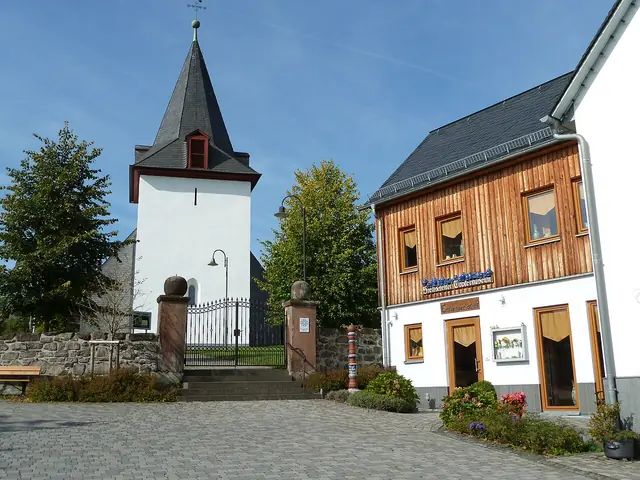
Oranien-Nassauisches Museum (Wilhelmsturm) mit Kasematten und Villa Grün
Museum complex on the Dillenburg castle hill, with a museum on William of Orange in the Wilhelmsturm, an economic history museum in Villa Grün and guided casemate tours.
Large-format panels with reports from the Dill-Zeitung (1946–1949 and 1960–1980) tell the history of Dillenburg; the Dillenburg rally driver Oda Dencker-Andersen is also portrayed. On view in the Villa Grün.
About the museum
The Dillenburg castle hill was once the ancestral seat of the Counts of Nassau, where William of Orange was born in 1533. During the Seven Years' War, French troops bombarded the fortress in 1760. After peace was made, the above-ground structures were demolished and the stones reused as building material. The Stockhaus and the underground casemates survived.
To commemorate William of Orange, the Wilhelmsturm, the town's landmark, was built from 1872 to 1875 with German and Dutch support. In the tower, the Oranien-Nassauisches Museum shows family trees, paintings, copper engravings, documents, weapons and models of the old castle and fortress complex, including a virtual tour.
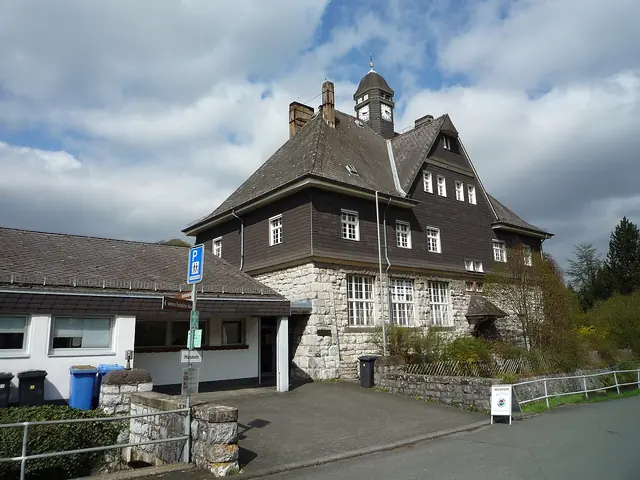
The neoclassical Villa Grün was built in 1914/15 for mine and smelter owner Carl Grün. The town bought the house in 1979 and handed it over to the Dillenburger Museumsverein (museum association), which opened an economic history museum there in 1983. Across more than 20 rooms on three floors, it presents mining, smelting, foundries, cast-iron stoves, art casting and traditional crafts of the Dill region.
The excavated casemates are now LED-lit and can only be visited on a guided tour of about one hour. The tour ends at the Löwengrube (lion pit) with its 62-meter-deep well and the so-called Rubensgefängnis (Rubens prison).
Highlights
Wilhelmsturm, the town landmark, with a museum on William of Orange
Villa Grün with mining, iron casting and crafts history
Casemates with the Löwengrube and a 62 m deep well
Castle park with William monument, Stockhaus and water play area
Permanent exhibitions
Oranien-Nassauisches Museum im Wilhelmsturm – Family trees, paintings, copper engravings, documents, weapons and castle models on William of Orange and the history of Dillenburg.
Wirtschaftsgeschichtliches Museum Villa Grün – Mining, smelting, foundries, cast-iron stoves and traditional crafts of the Dill region, across three floors.
Kasematten der Dillenburg – Underground fortifications with the Löwengrube, a deep well and the Rubens prison, visitable only on a guided tour.
Operated by
Dillenburger Museumsverein e. V.
Admission & discounts
Adults
€4
Children & teens
€2Children up to 15 years
Groups (15+ people)
€3.50 per personFrom 15 people, registration required
Families
€112 adults with 2 or more children
Castle hill pass (both museums plus casemate tour), adults
€7
Castle hill pass, children up to 15 years
€3.50
Castle hill pass, family
€18.502 adults with 2 or more children
Casemate tour only, adults
€4Children €2, family €11
The combined ticket for the Wilhelmsturm and Villa Grün costs €4 for adults, €2 for children up to 15 years and €11 for families. Group ticket for the castle hill (without museums): €2.50 per person from 15 people.
Accessibility
The museum hasn’t published any information on this.
Kids & families
Family ticket
€11 · 2 adults with 2 or more children
Playground / play area
The castle park has a water play area. Family tickets are available.
Getting there & parking
By car
Parking available
There are only a few spaces at Villa Grün and at the foot of the Wilhelmsturm. The recommended option is the car park at the start of the street Auf der Schütte, in front of the tennis courts, from which the castle park is a few minutes' walk away.
Navigation destination for the car park: 35683 Dillenburg, Auf der Schütte 21. Access via the Kutscherweg (at the top of the hill, on the left) or via Rehgartenstraße and Julianenstraße (on the right).
The museum hasn’t published any information on this.
Events & venue rental
Spaces for rent
Weddings / ceremonies
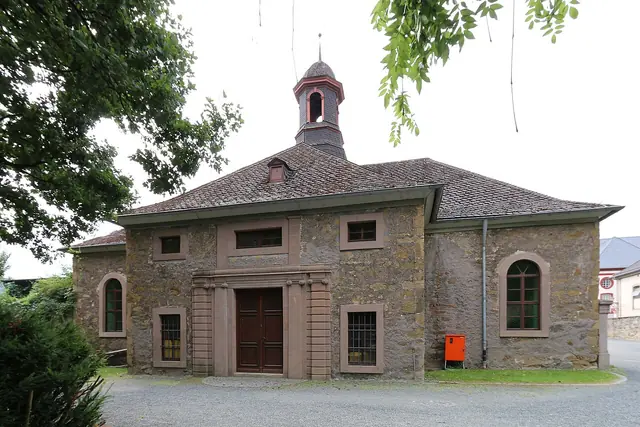
Weddings can take place at the Villa Grün museum, in the Wilhelmsturm and in the small chapel (Kapellchen). The Dillenburg registry office sets the dates; the room rental is then arranged with museum staff.
The casemates are shown on German tours and, on request, in English; for Dutch guests there is a written translation to take along. Sturdy shoes and possibly a jacket are advisable.