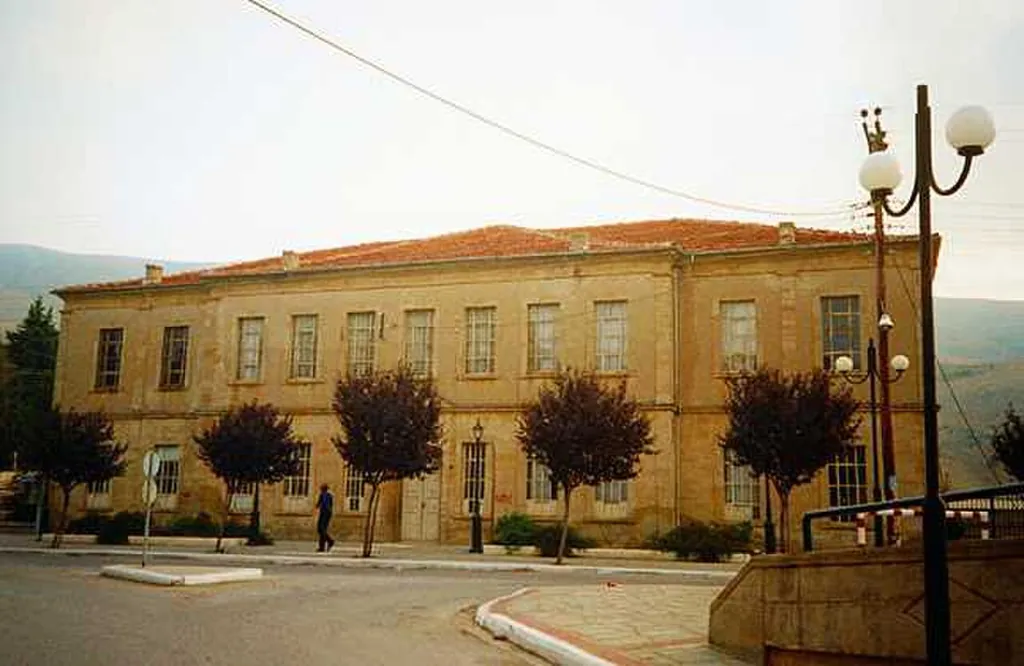
Paleontological Museum of Siatista
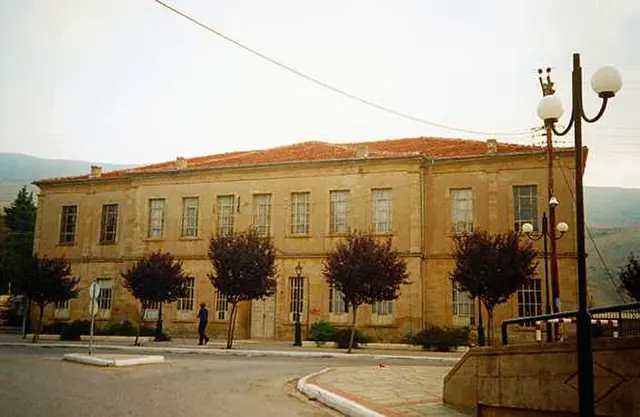
Palaeontological collection in the Trampantzeio Gymnasium, with mammoth and rhinoceros bones, rocks, minerals and the prehistoric elephant of Kalonero.
Have only individual sections read aloud
About the museum
The Palaeontological Collection of Siatista began in the early 20th century as a project of pupils and teachers of the town’s school, when it operated as the Trampantzeio. The first piece, a fossilised tusk, was found in 1902 in the Aliakmon valley. In 1906 Professor Anastasios Danas founded the “Palaeontological Collection of Siatista” in a room of the Gymnasium.
The Occupation caused damage to the most important pieces. After the liberation, the teachers reorganised the collection; in 1982 a dedicated room was set up, and in 1988 the collection was moved to a larger space in the Trampantzeio.
In 2011 a team of palaeontologists from the Department of Geology of the Aristotle University of Thessaloniki took over the new presentation of the finds. The collection includes bones of Pleistocene mammals, shells and the prehistoric elephant of Kalonero, which was discovered in 2006 and is about 125,000 years old.
Highlights
- Mammoth and rhinoceros bones of the Pleistocene period
- The prehistoric elephant of Kalonero, about 125,000 years old
- Rocks and minerals of the area
- Collection begun in 1906 at the Trampantzeio Gymnasium
Permanent exhibition
- Παλαιοντολογική συλλογή – The exhibition presents mammoth and rhinoceros bones, rocks, minerals and the prehistoric elephant of Kalonero.
- Founded
- 1906
- Operated by
- Δήμος Βοΐου
Admission & discounts
The museum hasn’t published any information on this.
Accessibility
The museum hasn’t published any information on this.
Kids & families
The museum hasn’t published any information on this.
Getting there & parking
The museum hasn’t published any information on this.
Amenities & dining
The museum hasn’t published any information on this.
Events & venue rental
The museum hasn’t published any information on this.
Plan your visit
| Good to know | The collection is housed in the Trampantzeio Gymnasium of Siatista, together with the Botanical Collection. |
|---|