Ecomuseo del Vanoi
Dispersed ecomuseum in the Vanoi valley with the Casa dell'Ecomuseo, the Sentiero Etnografico (Ethnographic Trail), a First World War museum, mills and a sawmill.
Have only individual sections read aloud
About the museum
The Ecomuseo del Vanoi grew out of initiatives launched in the late 1990s to preserve the memory of the valley's community: restoration of frescoed façades, and the survey and recovery of the wayside shrines and crucifixes along the roads. In October 1997 the Municipality of Canal San Bovo and the Paneveggio Pale di San Martino Nature Park signed an agreement to establish and manage the ecomuseum, whose central project is the Vanoi Ethnographic Trail, developed together with the Museo degli usi e costumi della gente trentina (Museum of Trentino Customs and Traditions). Recognition by the Autonomous Province of Trento came in 2002.
The ecomuseum is run by the Associazione Ecomuseo del Vanoi, founded in autumn 1999 with thirty-five members, which organises an annual programme of activities and looks after the information points. It sees itself as a “museum of space, time, community and its knowledge”, and offers around seventeen sites linked to seven themes: water, wood, mines, the sacred, war, grass and mobility.
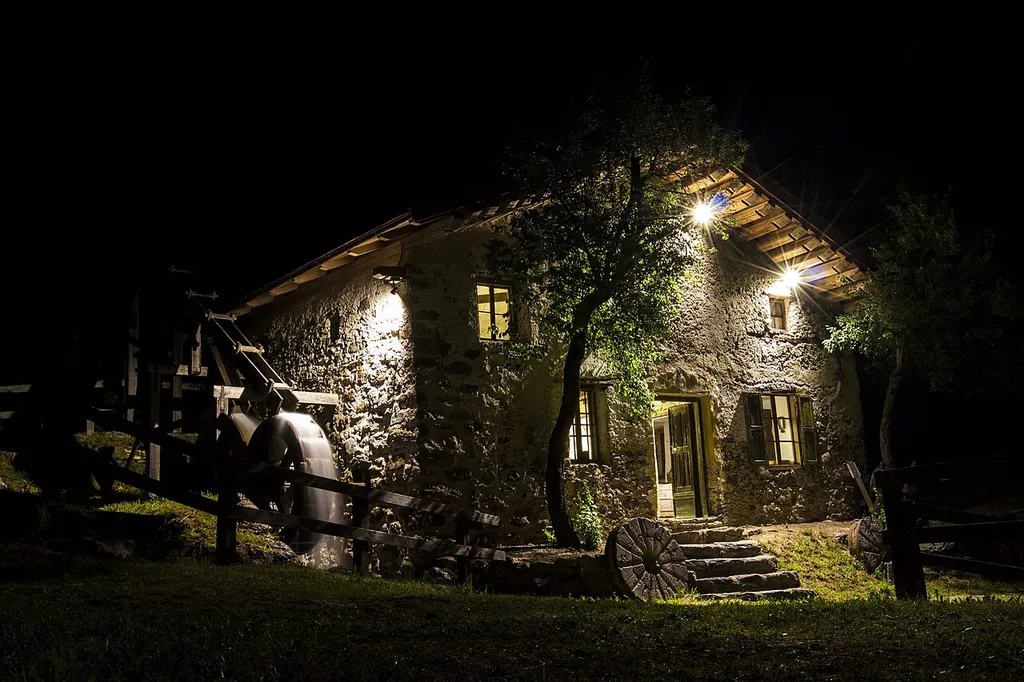
The seat is the Casa dell'Ecomuseo in Canal San Bovo, the gateway to the valley, with exhibition rooms. Among the places to visit are the Casa del Sentiero Etnografico and the Museo della Grande Guerra (First World War museum) in Caoria, the mid-altitude meadows of Pradi de Tognola, the Venetian-style water-powered sawmill Siéga de Valzanca, the Cainari mills at Ronco, the Stanza del Sacro in Zortea, the Piccolo Museo della Val dei Faori and the RadioMuseo del Vanoi.
Highlights
- Casa dell'Ecomuseo in Canal San Bovo with exhibition rooms
- Vanoi Ethnographic Trail, over 25 km of routes
- Venetian-style water-powered sawmill Siéga de Valzanca
- Mid-altitude rural settlement at Pradi de Tognola
- Cainari mills still powered by water
- Museo della Grande Guerra (First World War museum) in Caoria
Permanent exhibitions
- Sentiero Etnografico del Vanoi – Over 25 km of routes between Caoria and the high pastures, with rural settlements, a sawmill and mountain huts that show the valley's life until a few decades ago.
- Museo della Grande Guerra a Caoria – Permanent exhibition on the First World War on the Lagorai range, set up in Caoria.
- Founded
- 1997
- Operated by
- Associazione Ecomuseo del Vanoi
- Visitors per year
- approx. 7,458
Admission & discounts
| Adults | €3 |
|---|---|
| Children & teens | freefree up to age 8 · Free up to 8 years. |
The €3 ticket is valid for all ecomuseum sites on the day of purchase. Admission to the Casa dell'Ecomuseo is free, and also free for members of the Association. The ticket is included in the Trentino Guest Card.
Accessibility
The museum hasn’t published any information on this.
Kids & families
| Kids’ admission | free up to age 8 |
|---|
The website offers maps for children; some sites linked to the First World War are at altitude and require care with young children.
Getting there & parking
The Casa dell'Ecomuseo is in Piazza Vittorio Emanuele III in Canal San Bovo. The website mentions a shuttle service to reach the ecomuseum's sites.
Get directionsAmenities & dining
Hospitality facilities linked to the ecomuseum include the Bar alla Siéga, at the sawmill, and Prà dei Tassi.
Events & venue rental
The museum hasn’t published any information on this.
Plan your visit
| Guided tours | yes |
|---|---|
| School programs | yes |
| Good to know | Half-day or full-day guided excursions and “thematic loops” across the territory; educational projects for schools. Some sites, such as Prà de Madègo, can only be visited with a guide. |