Museo archeologico nazionale di Aquileia
The oldest museum of the UNESCO site of Aquileia, with portraits, mosaics, gems and amber from the great Roman city, housed in Villa Cassis and in visitable storerooms.
Have only individual sections read aloud
About the museum
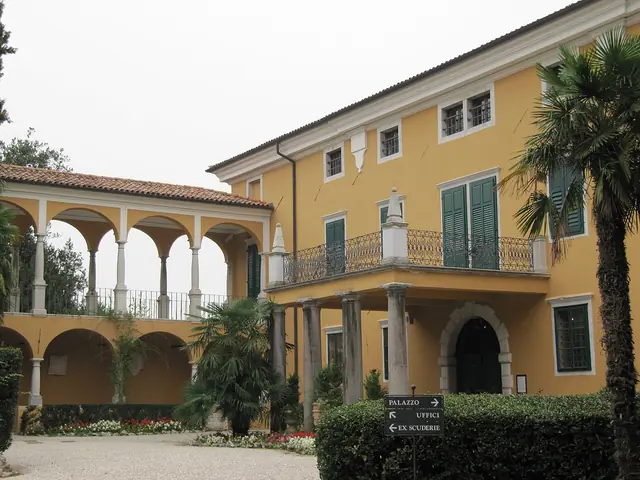
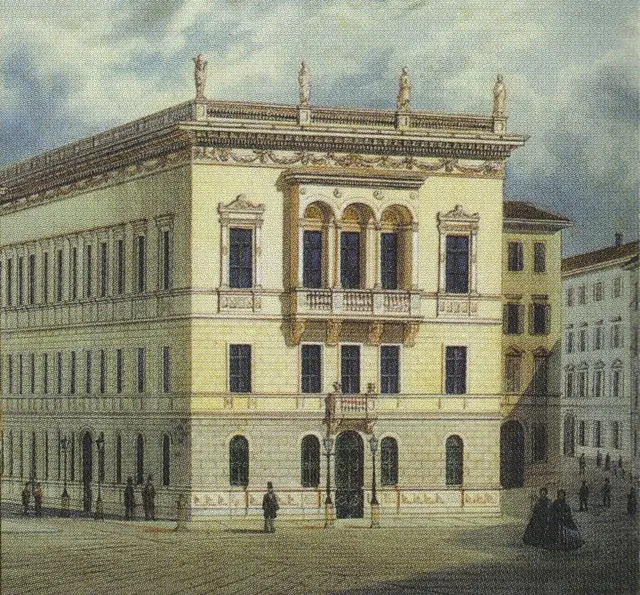
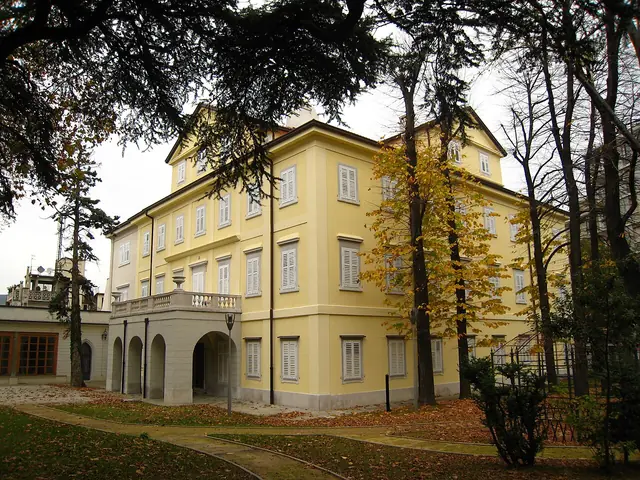
The museum was founded as the Imperial Regio Museo di Aquileia and opened on 3 August 1882 in the presence of Archduke Charles Louis of Habsburg. Its seat is Villa Cassis, the private residence of the noble Cassis Faraone family, purchased by the Habsburg state. The initial display arranged the finds by type and material, according to an antiquarian criterion, and was renewed several times over the twentieth century.
The stone galleries were built to house the large quantity of stone finds from the area: work began in 1898, on the occasion of the Jubilee of Emperor Franz Joseph; the first wing was completed by 1908 to a design by Georg J. W. Neumann, and the second in 1939. In the 1950s further galleries were added, along with the “Grandi magazzini” storerooms. At the end of the 1970s the naval section was set up for the restoration of a Roman boat discovered at Villa della Punta, near Monfalcone.
The latest major redisplay, completed in 2018, turned the route into eight thematic sections that present Aquileia as a great Mediterranean port, a crossroads of goods, languages and cultures for over seven centuries. In November 2024 the visitable storerooms opened: six rooms with over 5,000 stone artefacts and many other finds in glass, bone, metal and ceramic, together with the mosaics of the Grandi Terme. The museum is part of the network of the National Museums of Friuli Venezia Giulia.
Highlights
- Eight-section route through Villa Cassis, from the Roman city to everyday life
- Over 800 gems and cameos, and the jewellery and amber objects of Aquileian production
- Portraits of the ancient inhabitants, sculptures and mosaics
- Visitable storerooms with over 5,000 stone artefacts
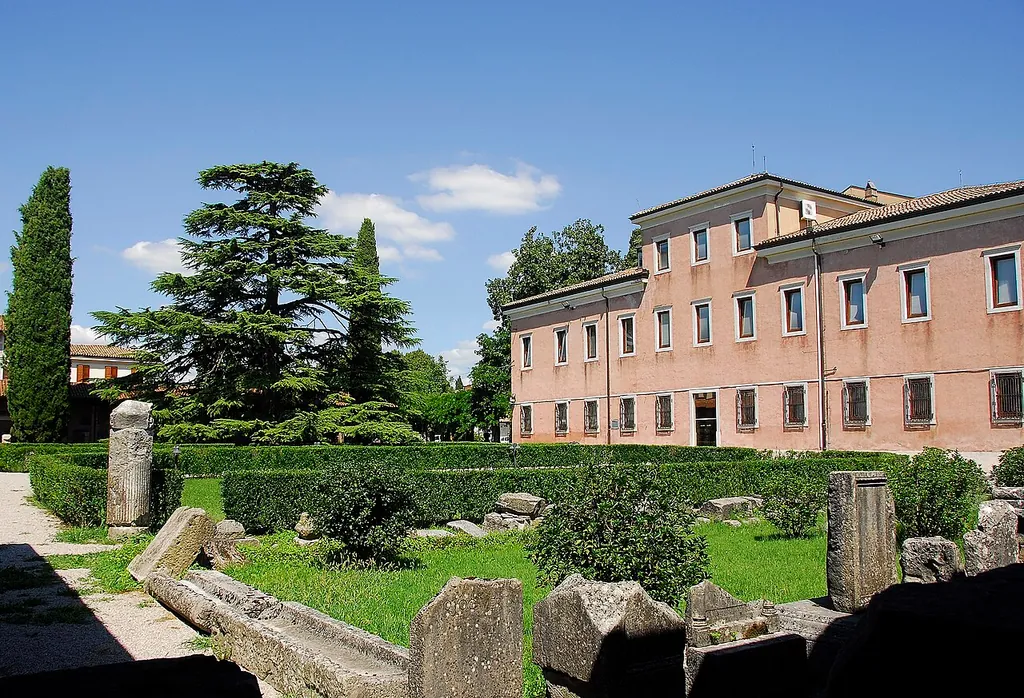
- Stone galleries with funerary monuments and garden with the enclosure of the Curii
- Audio-described tactile route on 11 original artefacts
Permanent exhibitions
- Villa Cassis: il percorso del museo – Eight sections on three floors portray Roman Aquileia: the city and its territory, public space, necropolises, domus, the port, productive activities and luxury, with a room devoted to over 800 gems.
- Depositi visitabili – Six rooms covering over 500 square metres display more than 5,000 stone artefacts and many finds in glass, bone, metal and ceramic, as well as the mosaics of the Grandi Terme.
- Gallerie lapidarie e giardino – Two quadriporticos around Villa Cassis with inscriptions, reliefs and funerary monuments, the mosaic collection and the funerary enclosure of the Curii in the garden; some areas are closed for works.
- Founded
- 1882
- Operated by
- Ministero della Cultura – Musei nazionali del Friuli Venezia Giulia
- Visitors per year
- approx. 46,033
Admission & discounts
| Adults | €10 |
|---|---|
| Reduced | €2Visitors aged 18 to 25 |
| Children & teens | freefree up to age 17 · Free admission for EU citizens under 18 and for non-EU minors. |
| Visitors with disabilities | freecompanion free · Free admission for EU citizens with disabilities and for one relative or companion, with documentation. |
| Students & apprentices | –Free admission for teachers and students of fine arts academies and of university courses in architecture, cultural heritage, education sciences and humanities with an archaeological or art-historical focus, with a certificate of enrolment. |
| Groups | –Booking is recommended for groups; groups of up to 25 people are admitted at a time, with one guide only. |
| #SuperMAN season pass (12 months) | €15Unlimited admission to the museum and exhibition areas for 12 months from purchase; personal and non-transferable; excludes events with a supplementary ticket. |
The museum applies the Ministry of Culture's fee concessions (including free admission for ICOM members, EU tourist guides and interpreters, journalists and teachers, among others). Admission is free for holders of the FVG Card; the museum is included in the FVGcard and FVGcard Aquileia & Grado circuits. Tickets can also be bought at museitaliani.it.
Accessibility
- Wheelchair accessible
- Elevator
- Accessible restroom: no information
- Accessible parking: no information
- Service dogs welcome: no information
- Tactile models & exhibits
- Sign language tours: no information
- Easy-to-read materials: no information
- Audio description
The visit route is free of architectural barriers and accessible in all its parts to people with motor disabilities; there is a lift. A tactile map of the complex is available in the reception area; seating is provided along the route and, at the ticket office and at various points, portable stools. For blind and partially sighted visitors, an audio description system in Italian and English guides the tactile exploration of 11 original artefacts. An app offers video guides in LIS for the room texts. On booking, the educational service organises visits and workshops for people with physical, sensory and cognitive disabilities.
Kids & families
Great for kids & families
| Kids’ admission | free up to age 17 |
|---|
- Family tours & workshops
- Activity booklet, scavenger hunt or kids’ audio guide
The educational service periodically organises events for families. On request at the ticket office, children receive the “Il museo in gioco” kit free of charge: a backpack with a map, an exploration diary with observation games, crayons, scissors and a magnifying glass. The family keeps the diary and map, while the backpack and tools are returned at the end of the visit.
Getting there & parking
By public transit
The nearest railway station is Cervignano – Aquileia – Grado, about 10 km away; from there the centre of Aquileia can be reached by local public bus. From Trieste airport (Ronchi dei Legionari) travel by taxi, bus or train to Cervignano del Friuli station.
By car
Parking available
The nearest car park is in Via Curiel, beyond the museum on the road towards Grado.
By car: leave the A23 at the Palmanova exit, then head south on the SR 352 for about fifteen kilometres to the centre of Aquileia. The museum entrance is on Via Roma, beside Via Iulia Augusta. Aquileia is connected to the Ciclovia Alpe Adria.
Get directionsAmenities & dining
- Museum shop
Bookshop at the ticket office.
Events & venue rental
The museum hasn’t published any information on this.
Plan your visit
| Guided tours | yes |
|---|---|
| Audio guide | yes |
| School programs | yes |
| Good to know | The museum provides free smartphone and tablet apps with in-depth content and themed routes, including one dedicated to the collection of gems and cameos. Guided tours for adults and young people are conducted by appointment by licensed tourist guides of Friuli Venezia Giulia (information at the PromoTurismoFVG Infopoint in Aquileia, +39 0431 919491). Group bookings: museoaquileiaeventi@cultura.gov.it or +39 0431 91016. |