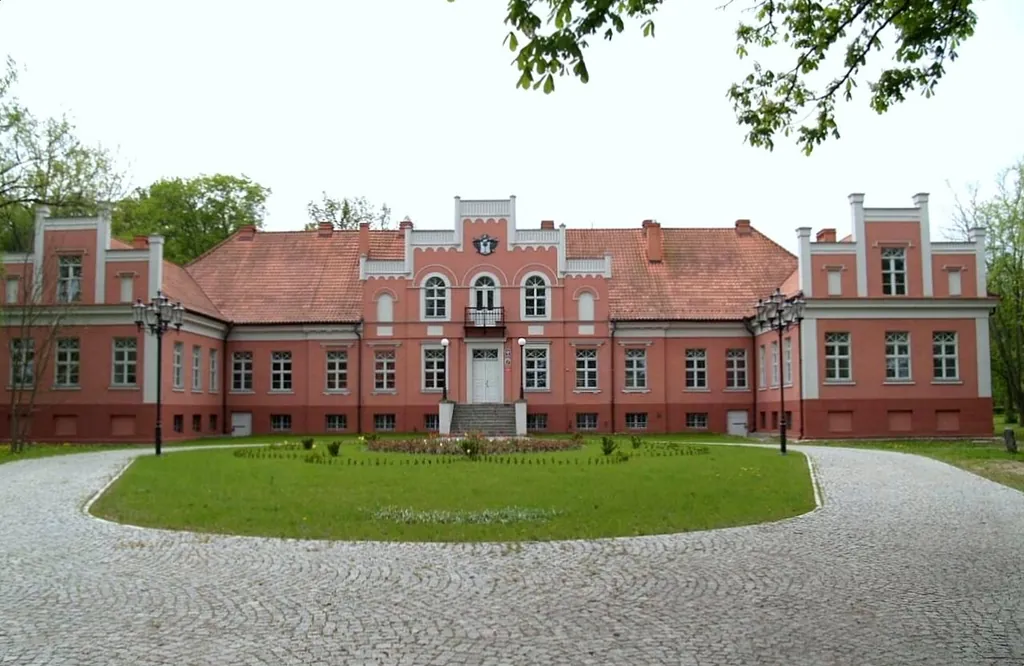
Muzeum Piśmiennictwa i Muzyki Kaszubsko-Pomorskiej w Wejherowie
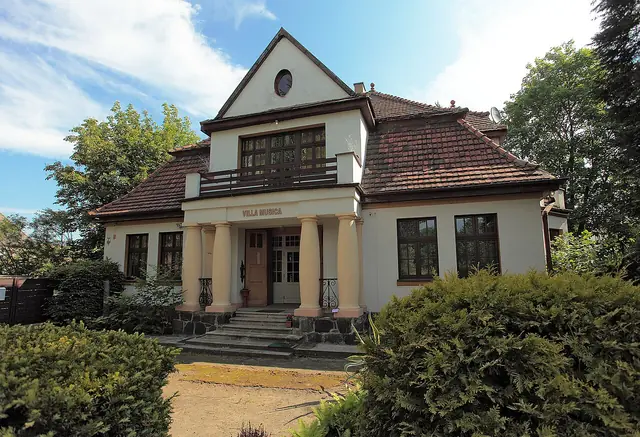
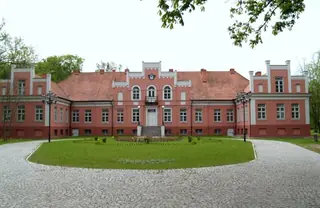
Kashubian museum in the Przebendowski and Keyserlingk Palace in Wejherowo, with exhibitions on literature, music and the history of Kashubia.
Have only individual sections read aloud
About the museum
The idea of a regional museum in Wejherowo emerged even before the Second World War and was realised thanks to a branch of the Kashubian-Pomeranian Association (Zrzeszenie Kaszubsko-Pomorskie). In 1967 Franciszka Majkowska, sister of Aleksander Majkowski, handed her collections over to the future museum. The Muzeum Piśmiennictwa i Muzyki Kaszubsko-Pomorskiej began operating on 1 September 1968 and draws on the idea of the Kashubian-Pomeranian Museum founded in Sopot in 1913.
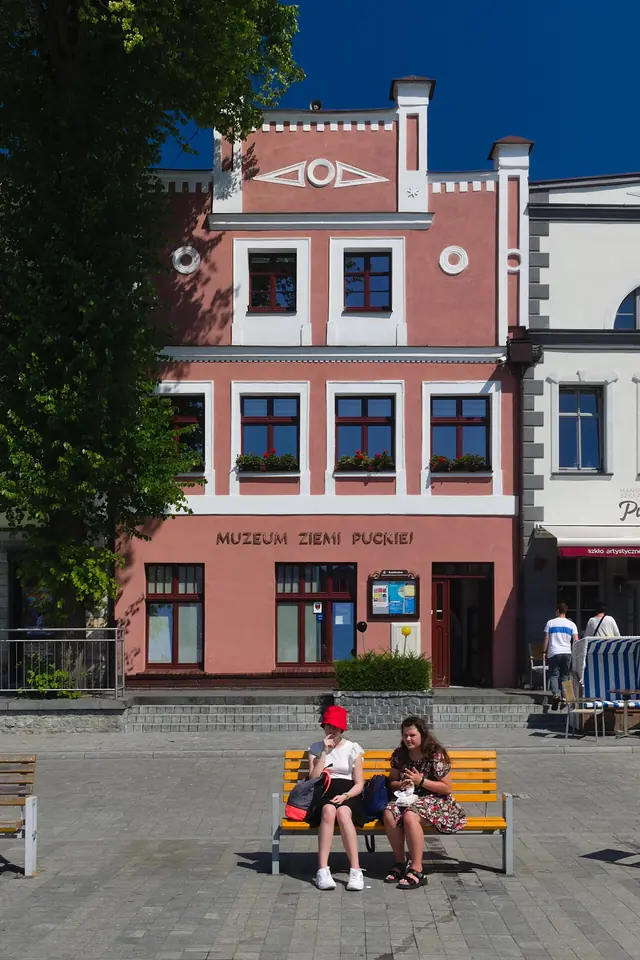
The institution changed premises several times: first it was in a townhouse at ul. Sienkiewicza, then at ul. Sobieskiego. In 1984 a townhouse at ul. Wałowa 14a was acquired, where the Department of Literature and Press is still based today. Since April 1995 the main seat has been the Przebendowski and Keyserlingk Palace at ul. Zamkowa 2A, located in a park in the town centre.
Next to the palace stands the Książnica prof. Gerarda Labudy, with a permanent exhibition on the history of the Kashubians. The museum runs seven departments, including literature and press, manuscripts and early prints, music, and art and ethnography. It also publishes books in Polish and Kashubian and organises literary competitions and concerts.
Highlights
- Przebendowski and Keyserlingk Palace in a park in the centre of Wejherowo
- Permanent exhibition ‘Gryf w historii i kulturze Pomorza’ (The Griffin in the History and Culture of Pomerania)
- Książnica prof. Gerarda Labudy with the exhibition ‘Historia Kaszubów wg prof. Gerarda Labudy’ (History of the Kashubians according to Prof. Gerard Labuda)
- Collections of literature, manuscripts, early prints and Kashubian-Pomeranian music
- The Książnica is the only building in the world in which the narrative language is Kashubian
Permanent exhibitions
- Gryf w historii i kulturze Pomorza – Permanent exhibition on the symbolism of the griffin, its presence in noble heraldry and its significance for the identity of Kashubians and Pomeranians.
- Historia Kaszubów wg prof. Gerarda Labudy – Permanent exhibition in the Książnica on the history of Kashubia and Pomerania from the earliest times to the present, based on archival materials, maps and mementos of Professor Labuda.
- Founded
- 1968
- Operated by
- Muzeum Piśmiennictwa i Muzyki Kaszubsko-Pomorskiej w Wejherowie
Admission & discounts
| Adults | 15 zł |
|---|---|
| Reduced | 10 zł |
| Guided tour | 50 zł |
Free admission: Admission is free on Sundays.
Accessibility
- Wheelchair accessible
- Elevator
- Accessible restroom
- Accessible parking
- Service dogs welcome
- Tactile models & exhibits: no information
- Sign language tours: no information
- Easy-to-read materials: no information
- Audio description: no information
The palace’s main entrance is reached by stairs, but the side entrance has a ramp for wheelchairs. The building has a lift, and the corridors, exhibition halls and rooms in the cellar, on the ground floor and on the first floor are accessible. The palace’s accessible toilet is in the cellar. The Książnica has a step-free entrance from the pavement, a lift and a toilet on the ground floor. The building at ul. Wałowa 14A has stairs and no lift or adapted toilet. Unmarked accessible parking spaces are in front of the buildings. None of the buildings have induction loops or Braille signage; assistance dogs are permitted.
Kids & families
The museum hasn’t published any information on this.
Getting there & parking
By car
- Accessible parking
The palace stands in a park, about 150 m from ul. Zamkowa into the park.
Get directionsAmenities & dining
The museum hasn’t published any information on this.
Events & venue rental
- Spaces for rent
The museum rents out rooms; details are on the ‘Wynajem sal’ (room hire) page.
Inquiries & detailsPlan your visit
| Guided tours | yes |
|---|---|
| School programs | yes |
| Good to know | The museum runs an educational programme for schools, as well as concerts, competitions and literary meetings; the concert hall is valued for its acoustics. |