Muzeum Wsi Słowińskiej
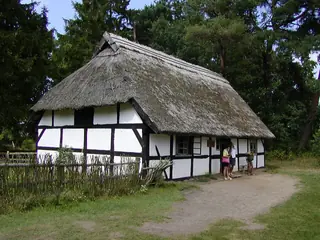
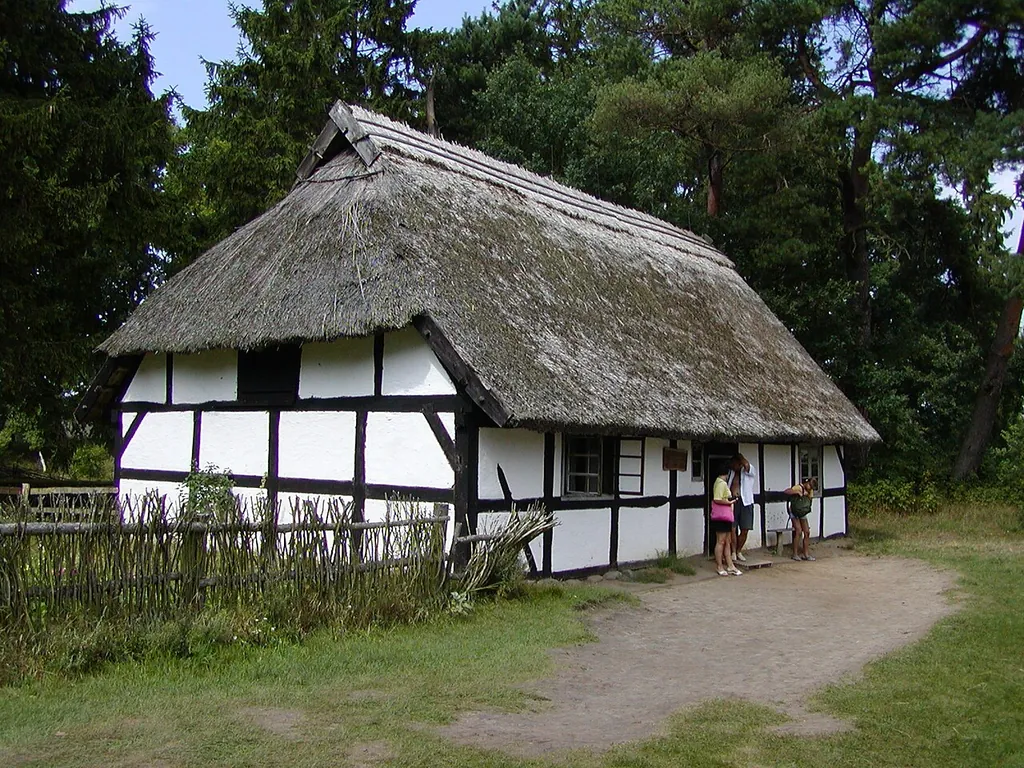
Open-air museum in Kluki with historic half-timbered farmsteads, presenting the life and culture of the Słowińcy, former fishermen on Lake Łebsko.
Have only individual sections read aloud
About the museum
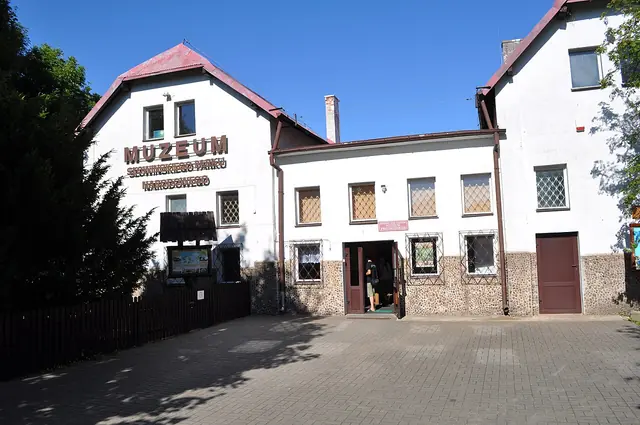
The idea of setting up a museum farmstead in Kluki emerged in 1958 among museum staff and activists involved in the cause of the Słowińcy. The scientific concept was developed by a team of ethnographers from Toruń, and the Słowińska Museum Farmstead (Muzealna Zagroda Słowińska) opened on 22 September 1963. From 1965 it has been part of the Słupsk museum, initially as a branch of its ethnographic department.
In the 1970s the authorities planned to demolish most of the old Słowińcy homesteads. Thanks to the efforts of museum staff, several historic buildings were saved and moved to the open-air museum. At the end of the 1970s the concept emerged of extending the museum into a reconstruction of part of a former fishing village.
In the following years further farmsteads were opened: the cottage of Charlotte Klück, the farmstead of Albert Klück, the Keitschick farmstead, a fishing hut from the Łebska Sandbar (Mierzeja Łebska) and the Słowińcy Centre of Regional Culture. In 1995 the museum adopted its present name. Today the open-air museum consists of half-timbered buildings from the 18th, 19th and 20th centuries, set among old trees on both sides of the road that runs through the village.
Highlights
- Half-timbered farmsteads from the 18th to 20th centuries, set on the site of a former fishing village
- Reimann farmstead – the first museum farmstead, opened in 1963
- Charlotte Klück’s cottage with a wide brożyna-type chimney and the exhibition “Kuchnia Pomorska” (Pomeranian Kitchen)
- Fishing hut from the Łebska Sandbar with equipment from the 1920s
- Audio guide in the Movi Guide app in Polish and German
- Tavern “U Dargoscha” in a restored cottage from Wierzchocina
Permanent exhibitions
- Zagroda Reimannów – The first museum farmstead, with a three-family cottage and outbuildings; the exhibition introduces the culture of the Słowińcy and their traditional work, including fibre processing and farming.
- Chałupa Charlotty Klick – 18th-century cottage with a wide brożyna-type chimney, housing the exhibition “Kuchnia Pomorska” (Pomeranian Kitchen).
- Zagroda Keitschicków – Two-family cottage with outbuildings and a bread oven, furnished with interiors from the 1940s and 1950s.
- Founded
- 1963
- Operated by
- Muzeum Pomorza Środkowego w Słupsku
Admission & discounts
| Adults | 24 zł |
|---|---|
| Reduced | 18 zł |
| Families | –Members of large families with the nationwide Large Family Card receive a 15% discount. |
| Ticket to all sites of the Museum of Central Pomerania (May–October, valid for 20 working days) | 90 złReduced ticket PLN 65. Includes the castle and Młyn Zamkowy (Castle Mill) in Słupsk, the Biały Spichlerz (White Granary), the open-air museum in Kluki and the Museum of Pomeranian Folk Culture in Swołowo. |
| Museum lesson (workshops and reduced ticket, price per person) | 50 zł |
| Guided tour in Polish | 170 złIn German PLN 200; booking by e-mail at least 3 days in advance, for groups of up to 30 people. |
Free admission: Admission is free on Mondays from May to September from 10:00 to 13:00, and on Tuesdays from October to April from 10:00 to 13:00.
Accessibility
- Wheelchair accessible: not available
- Elevator: not available
- Accessible restroom
- Accessible parking: no information
- Service dogs welcome
- Tactile models & exhibits: not available
- Sign language tours: not available
- Easy-to-read materials: no information
- Audio description: no information
Only earth paths can be used within the open-air museum. All exhibitions are on the ground floor of the historic buildings, but there are thresholds at the entrances, no ramps, and narrow doors and corridors make it difficult to enter with a wheelchair. The toilet for people with special needs is located behind the last farmstead open to visitors. The museum has no induction loops and no Polish Sign Language (PJM) interpreter. The virtual tour of the open-air museum includes descriptions for deaf visitors and audio narration. Assistance dogs are allowed in all buildings.
Kids & families
| Time needed | approx. 1.5 hrs |
|---|
Members of large families with the nationwide Large Family Card pay 15% less for tickets. The paths in the open-air museum are earthen, so prams may have difficulty moving along them.
Getting there & parking
By public transit
Kluki · 300 m
Public transport access is difficult: there is no railway line, and PKS buses from Słupsk and Smołdzino run to Kluki.
By car
Free parking · 400 m to the entrance
Free public car park in the village, about 400 m from the museum entrance.
The museum is in the centre of the village of Kluki, about 40 km from Słupsk. It is most convenient to arrive by car or coach. The museum entrance (gate) is on the left side of the road, behind the seventh residential house, opposite the pond.
Get directionsAmenities & dining
- Restaurant
- Museum shop
The tavern “U Dargoscha” is located in a restored cottage from Wierzchocina. A craft shop operates in the summer season next to the ticket office, in the Reimann farmstead.
Events & venue rental
The museum hasn’t published any information on this.
Plan your visit
| Guided tours | yes |
|---|---|
| Audio guide | yes (PL, DE) |
| School programs | yes |
| Good to know | The audio guide is available in the Movi Guide app (it works offline on the open-air site, so it is worth downloading the content before your visit) and can be borrowed free of charge at the ticket office against a deposit of PLN 50. Guided tours in Polish or German must be booked by e-mail at least three days in advance; a guide takes groups of up to 30 people, and a booking lapses if the group is more than 15 minutes late. |