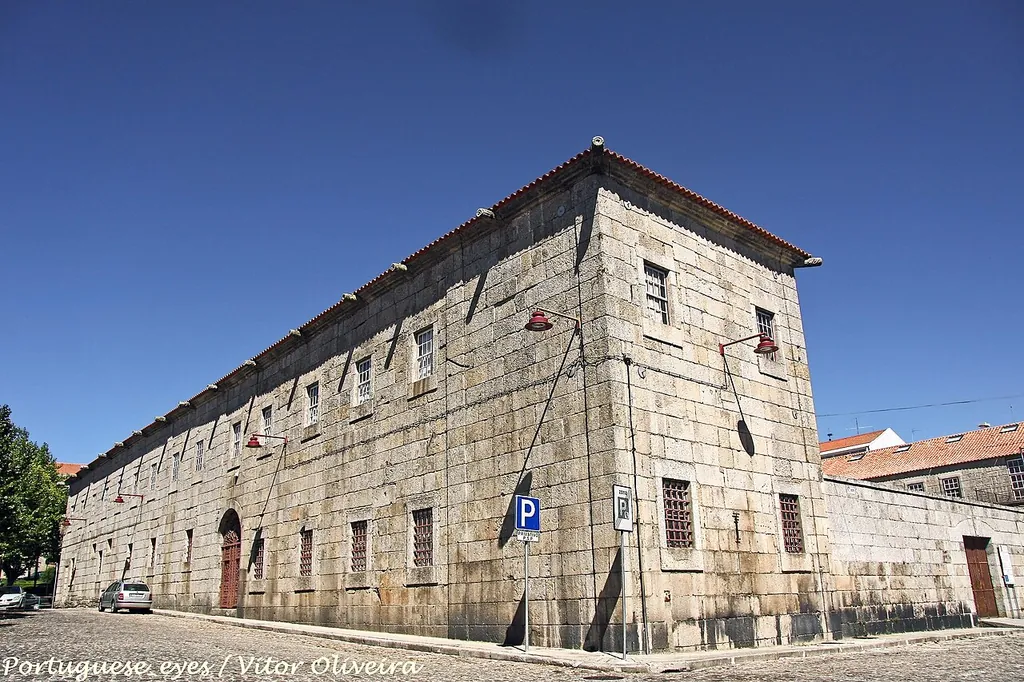
Museu da Guarda
Regional museum in the former seminary and episcopal palace of Guarda, with archaeology, numismatics, sacred sculpture and painting, and contemporary art.
Have only individual sections read aloud
About the museum
The Museu da Guarda was officially founded on 6 January 1940, by decision of the Municipal Council, and opened to the public on 30 July 1940, still under the name Museu Regional da Guarda. It was installed in part of the former seminary and began with five exhibition spaces: a painting gallery, a religious art room, a ceramics room, an atrium and corridors.
In the sixties the municipality transferred the museum's movable property to the Junta Distrital (district council), and in 1982 the museum passed to the then Instituto Português do Património Cultural, reopening to the public in 1985 after remodelling works. It was later under the Instituto dos Museus e da Conservação and the Direção-Geral do Património Cultural, and in October 2015 it returned to the Municipal Council of Guarda, which gave it a new museological concept.
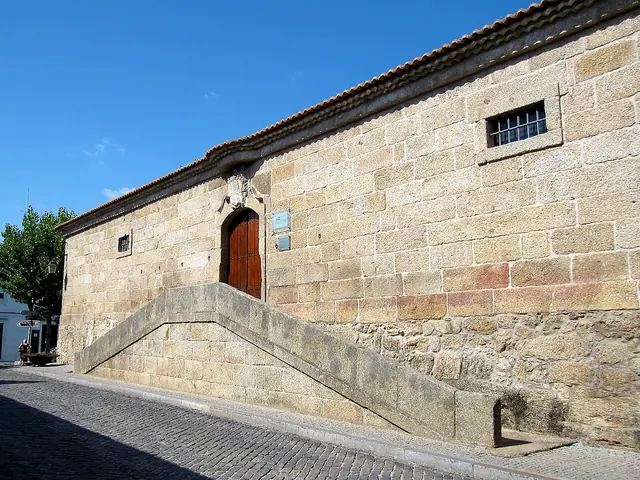
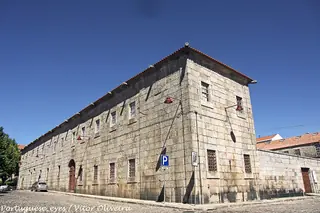
The museum occupies the complex formed by the former Episcopal Palace (Paço Episcopal) and the former seminary of Guarda, which began to be built at the beginning of the 17th century (the seminary in 1601, by D. Nuno de Noronha). The reformulated permanent exhibition follows a chronological order in four sections: prehistoric archaeology; proto-historic and Roman archaeology; medieval and post-medieval archaeology; and sacred art. Highlights include two Bronze Age swords, a Roman imperial torso of the 2nd century and a 13th-century Nossa Senhora da Consolação in polychrome granite.
Highlights
- Archaeology of the region, from prehistory to the medieval period
- Two Bronze Age swords and a Roman imperial torso
- Sacred sculpture from the 13th to 18th centuries, in polychrome granite
- Sacred painting from the 16th to 18th centuries
- Five works from the Novo Banco Collection by 20th-century Portuguese artists
Permanent exhibitions
- Exposição permanente do Museu da Guarda – Chronological route in four sections: prehistoric, proto-historic and Roman, medieval and post-medieval archaeology, and sacred art.
- Cinco obras de artistas portugueses do século XX – Coleção Novo Banco – Works by Nikias Skapinakis, João Hogan, Júlio Resende, José de Guimarães and Luís Pinto Coelho, the result of a partnership between NB Cultura and the Municipal Council of Guarda.
- Founded
- 1940
- Operated by
- Município da Guarda
Admission & discounts
| Reduced | –50% discount for visitors aged 65 or over, students, Cartão Jovem holders, large families (2 adults and 3 children) and family tickets (from four members in direct line). |
|---|---|
| Children & teens | freefree up to age 12 · Free admission up to age 12, with proof. |
| Seniors | –50% discount from age 65. |
| Students & apprentices | –50% discount with a student card; free admission for students on a booked study visit. |
| Groups (15+ people) | –Group companions: one for every 15 people at most, with free admission. |
| Families | –50% discount for large families and family tickets. |
Free admission: On the first Sunday of each month admission is free for individual visits and for groups of up to 12 people.
The guided visit during opening hours carries a surcharge of €1 per participant (groups of at least 15); outside opening hours, with booking, the surcharge is €2. Free admission also for unemployed people resident in the European Union, museum and heritage professionals, members of ICOM, ICOMOS and APOM, journalists on duty and friends of the museum.
Accessibility
The museum hasn’t published any information on this.
Kids & families
The museum hasn’t published any information on this.
Getting there & parking
The museum is in the historic centre of Guarda, next to Largo João de Deus.
Get directionsAmenities & dining
- Museum shop
The museum shop sells catalogues, books, ceramics and merchandise.
Events & venue rental
The museum hasn’t published any information on this.
Plan your visit
| Guided tours | yes |
|---|---|
| School programs | yes |
| Good to know | Guided visits during opening hours or, by booking, outside them. The museum has educational services with activities. |