Slovenski železarski muzej
Museum in the ironworks settlement of Stara Sava in Jesenice, with exhibitions on technical heritage and the living culture of ironworking families.
Have only individual sections read aloud
About the museum
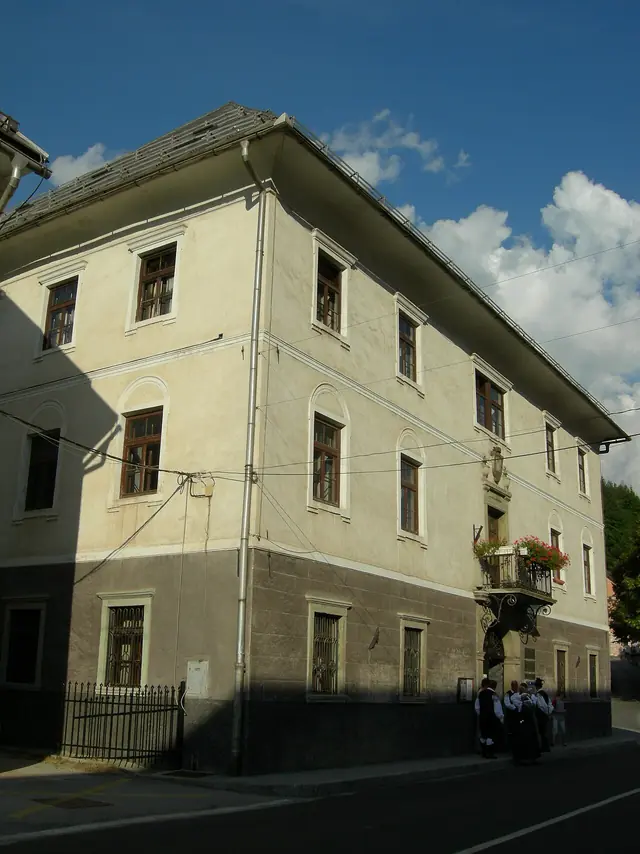
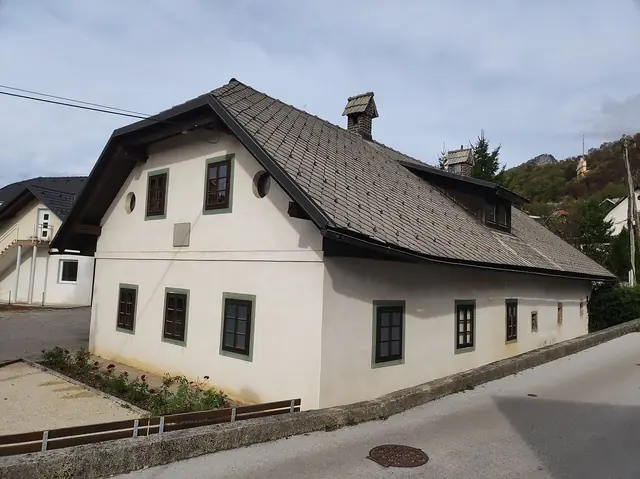
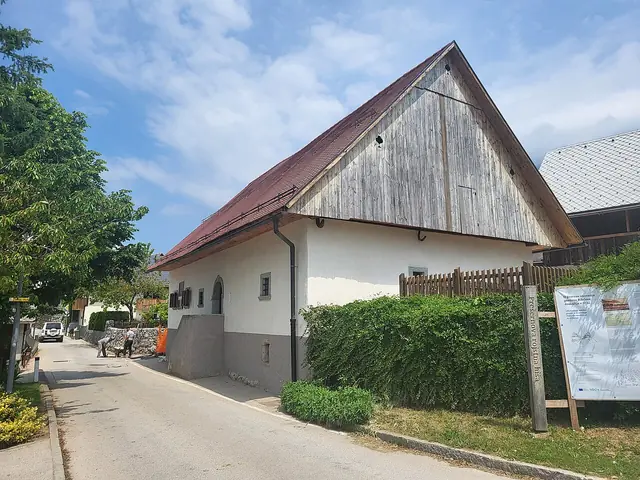
The Slovenski železarski muzej (Slovenian Ironworks Museum), run by the Gornjesavski muzej Jesenice, comprises the entire ironworks settlement of Stara Sava in Jesenice. Because of its exceptional urban, technical, architectural and historical significance, the settlement has been declared a cultural monument of national importance. The preserved core of buildings has most of the characteristics of an ironworks settlement from the end of the 17th century, as depicted in Andreas Trost's copperplate engraving in Valvasor's Slava vojvodine Kranjske (The Glory of the Duchy of Carniola).
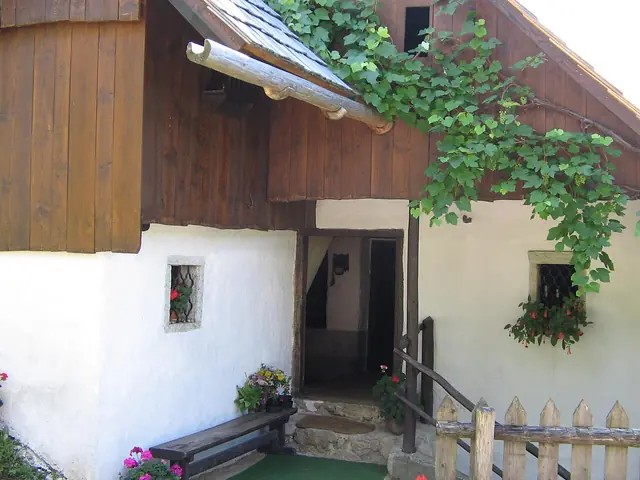
The centre of the settlement is a square with the remains of a blast furnace built at the beginning of the 16th century. On its eastern side stands the Delavska kasarna (Workers' Barracks), a late Baroque building from the late 18th century and one of the oldest preserved shared workers' housing blocks in Slovenia; ironworking families lived in it until 1983. The barracks has been a cultural monument since 1985, and in 2005 it was renovated by the Občina Jesenice. On the north side of the square stand the Bucelleni-Ruard manor house from the early 16th century and the ironworks church of the Assumption of Mary from 1606.
Visitors can see the permanent exhibition of technical heritage objects of the former Železarna Jesenice, presented outdoors in their original setting, and in the Kasarna a permanent ethnological exhibition on the domestic culture and life of ironworking families, with a reconstructed workers' flat from the thirties and forties of the 20th century. The Kolpern banquet hall, in a former charcoal store, hosts events.
Highlights
- Ironworks settlement of Stara Sava, a cultural monument of national importance
- Remains of a blast furnace from the early 16th century
- Reconstructed workers' flat from the thirties and forties of the 20th century
- Technical heritage objects of the former Železarna Jesenice outdoors
- Kolpern banquet hall for events
Permanent exhibitions
- Tehniška dediščina na Stari Savi – Permanent exhibition of technical heritage objects of the former Železarna Jesenice and of the Kranjska industrijska družba (Carniolan Industrial Company), presented outdoors in their original setting.
- Delavsko stanovanje – Ethnological exhibition on the domestic culture and way of life of ironworking families, with a reconstructed workers' flat in the Kasarna.
- Founded
- 1954
- Operated by
- Gornjesavski muzej Jesenice
Admission & discounts
| Adults | €5 |
|---|---|
| Reduced | €3children, young people, pupils, students and pensioners |
| Children & teens | €3 |
| Groups (10+ people) | €5 per personGuided tours for groups: up to 10 persons €10 per group, 11 to 25 persons €20 per group. |
| Families | €12 |
The ticket is also valid for admission to the Mestni muzej Kosova graščina. Educational workshops cost from €1.50 to €5.
Accessibility
The museum hasn’t published any information on this.
Kids & families
Great for kids & families
| Family ticket | €12 |
|---|
- Family tours & workshops
- Hands-on stations
The museum offers educational workshops and programmes for schools and kindergartens; during the workshops in the Kasarna visitors prepare a workers' coffee.
Getting there & parking
The museum hasn’t published any information on this.
Amenities & dining
The museum hasn’t published any information on this.
Events & venue rental
- Spaces for rent
- Private parties
- Corporate events
- Weddings / ceremonies
Up to 180 guests.
The Kolpern banquet hall has up to 180 seats, a kitchen for catering and projection equipment with internet access.
Inquiries & detailsPlan your visit
| Guided tours | yes |
|---|---|
| School programs | yes |
| Good to know | The settlement can also be experienced on a guided tour with historical characters, among them the owner of the ironworks, Viktor Ruard, and Angela Boškin, the first nurse in Slovenia. In the Kasarna educational workshops take place, including the preparation of a workers' coffee. |