Parque de la Vida
Science museum and nature park in La Mata (Valdés), with rooms on life, the oceans and space, a real Ariane 5 and native woodland; closed since September 2026.
Have only individual sections read aloud
About the museum
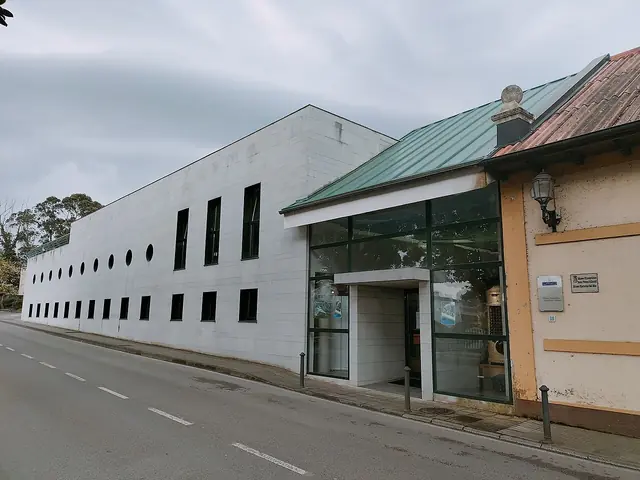
The Parque de la Vida is a science museum and natural space in La Mata, a few kilometres from Luarca, in the municipality of Valdés. It was founded and is directed by Luis Laria, and was conceived for environmental education, knowledge of the environment and scientific outreach. It covers almost two hectares and also includes a shelter and wildlife recovery centre.
The indoor rooms total about 750 m² and trace the history of life, from the origin of the stars and the Earth to human evolution, with spaces dedicated to Severo Ochoa and Margarita Salas, to marine life and whaling, to one of the most important cephalopod collections in the world (with a giant squid 11 metres long), and to astronautics, with a real Ariane 5 rocket whose fuselage visitors can enter. A planetarium and an observatory complete the offer.
Outdoors there is a native woodland with more than 1.5 km of trails, more than 600 trees planted, four lagoons and a stream, as well as several themed paths and a children's route, the PekeParke.
At the end of September 2026 the park closed to the public for an indefinite period; according to its director, in early 2027 it will be decided whether it reopens or closes permanently.
Highlights
- Real Ariane 5 rocket whose fuselage can be entered
- Cephalopod collection with a giant squid 11 metres long
- Rooms on human evolution, ocean life and whaling
- Planetarium and observatory
- Native woodland with lagoons and themed trails, and the PekeParke children's route
Permanent exhibitions
- Exposiciones permanentes sobre la vida, los océanos y el espacio – Some 750 m² of rooms: Polvo de estrellas, Camino a la vida, Laboratorio, Evolución humana, Vida oceánica, Caza de la ballena, Cefalópodos del mundo, Ariane 5, Planetario and Observatorio.
- Ariane 5 – Real space rocket whose fuselage visitors can enter.
- Cefalópodos del mundo – One of the most important cephalopod collections in the world, with a giant squid 11 metres long.
Admission & discounts
| Adults | €8 |
|---|---|
| Children & teens | €6free up to age 4 · Unguided visit for children aged 5 to 11; under-5s do not pay. |
| Groups | –Prices and conditions for schools, associations and groups, on request. |
| Guided visit, adults | €12 |
| Guided visit, children aged 5 to 11 | €7 |
Rates in force before the closure: unguided visit, €8 for adults and €6 for children aged 5 to 11; guided visit, €12 and €7. Under-5s free.
Accessibility
The Parque de la Vida is temporarily closed; in early 2027 it will be decided whether it reopens.
Kids & families
Great for kids & families
| Kids’ admission | free up to age 4 |
|---|
- Family tours & workshops
- Playground / play area
The PekeParke is a route of about 200 metres designed for children to investigate life; there are also workshops and activities on request, subject to enquiry.
Getting there & parking
The Parque de la Vida is temporarily closed; in early 2027 it will be decided whether it reopens.
Amenities & dining
Pets are allowed.
Events & venue rental
The Parque de la Vida is temporarily closed; in early 2027 it will be decided whether it reopens.
Plan your visit
| Guided tours | yes |
|---|---|
| School programs | yes |
| Good to know | Guided or self-guided visits, always with prior booking. The park also offers workshops and activities on request, subject to enquiry. |