Charlottenburgs gård i Solna
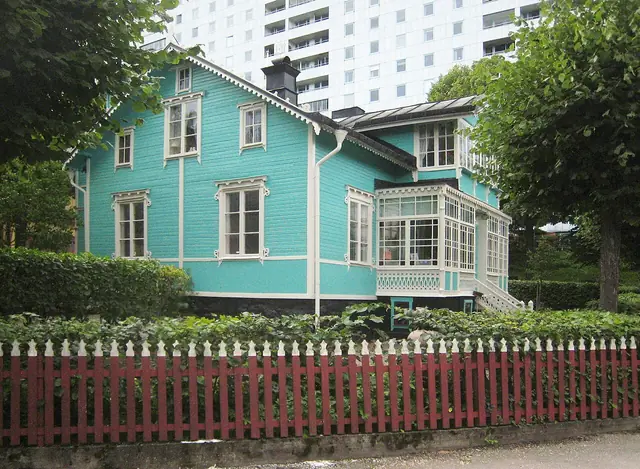
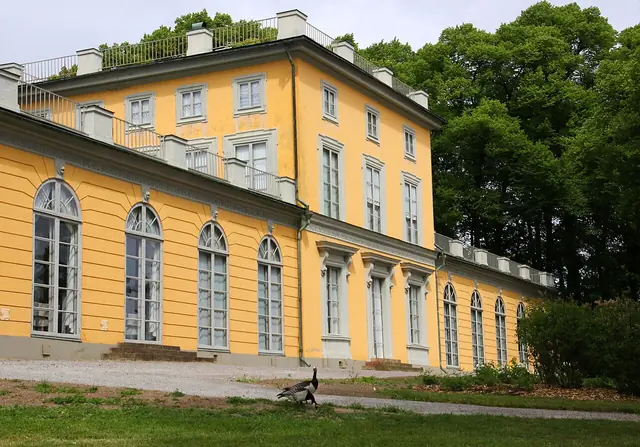
Solna's homestead museum (hembygdsgård) from the early 1800s in Vasalund, where Solna Local Heritage Society arranges exhibitions on the town's history.
Have only individual sections read aloud
About the museum
Charlottenburg was originally a crofter's holding (torp) under Stora Frösunda. In 1801 Adolf Fredrik Wijnbladh had it rebuilt into the house that is now nine rooms long, and laid out a garden and a small English park. The estate was named after his wife, Charlotte Arbin. During the 1800s the farm was a summer retreat, and in 1908 Råsunda Förstads AB took over the area for residential building, but the old farm was preserved.
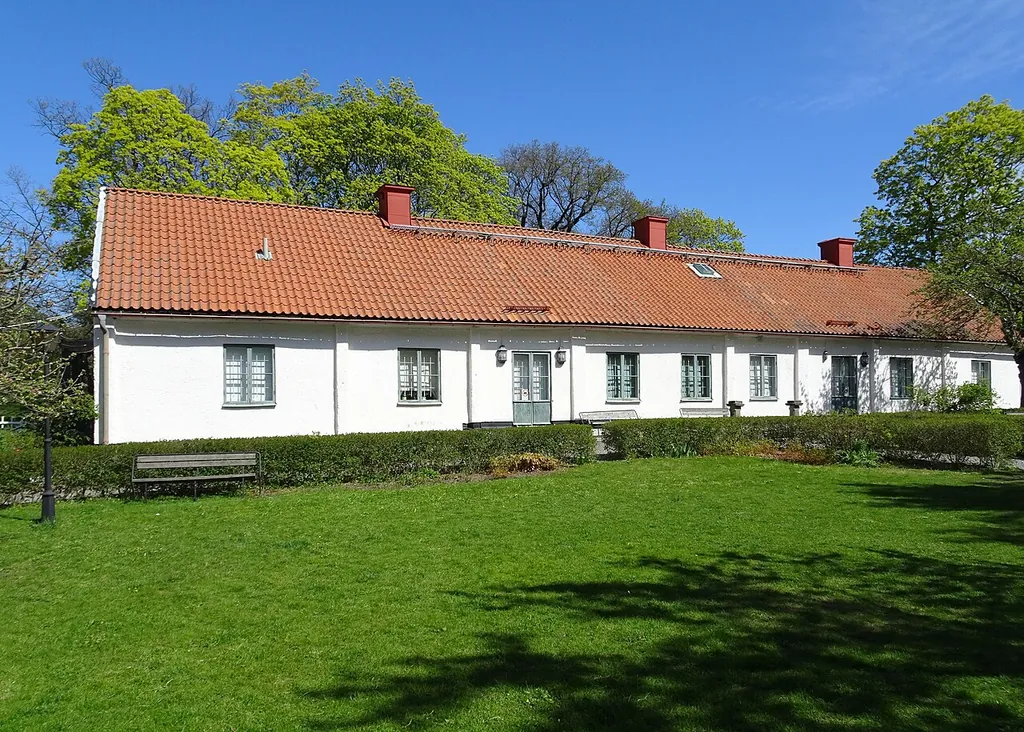
Solna Municipality bought the farm in the early 1960s and has renovated the buildings. Half of the main building is used by Solna Local Heritage Society, which arranges exhibitions and activities about Solna's history. In the wing, which was renovated in 2012, is Solna School Museum (Solna skolmuseum). The main building and the wing are blue-classified (blåklassade), a heritage designation, and are considered to have exceptionally high cultural-historical value.
On the farm there is a labyrinth of stones, a so-called jungfrudans (maiden's dance), which was created in 1990. In the English park stands a smithy that originally stood at Lilla Frösunda, and a pumping house from Hagalunds torg.
Highlights
- The farm from around 1801 with its preserved English park
- Solna Local Heritage Society's exhibitions on the town's history
- Solna School Museum in the wing
- Jungfrudans, a stone labyrinth from 1990
- Smithy from Lilla Frösunda in the park
Permanent exhibition
- Solna hembygdsförenings utställningar – Exhibitions and activities about Solna's history in the half of the main building used by the Local Heritage Society.
- Operated by
- Solna stad (fastighetsägare); Solna hembygdsförening
Admission & discounts
The museum hasn’t published any information on this.
Accessibility
- Wheelchair accessible: not available
- Elevator: no information
- Accessible restroom: not available
- Accessible parking: no information
- Service dogs welcome: no information
- Tactile models & exhibits: no information
- Sign language tours: no information
- Easy-to-read materials: no information
- Audio description: no information
The farm is not adapted for people with reduced mobility and has no accessible toilet; the buildings' high cultural-historical value makes conversion difficult.
Kids & families
The museum hasn’t published any information on this.
Getting there & parking
The museum hasn’t published any information on this.
Amenities & dining
The museum hasn’t published any information on this.
Events & venue rental
The museum hasn’t published any information on this.