Národní muzeum pivovarnictví
Museum in the historic Černokostelecký brewery of 1842, with working brewing technology and the largest surviving wood-fired brewhouse.
Have only individual sections read aloud
About the museum
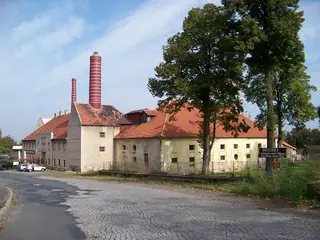
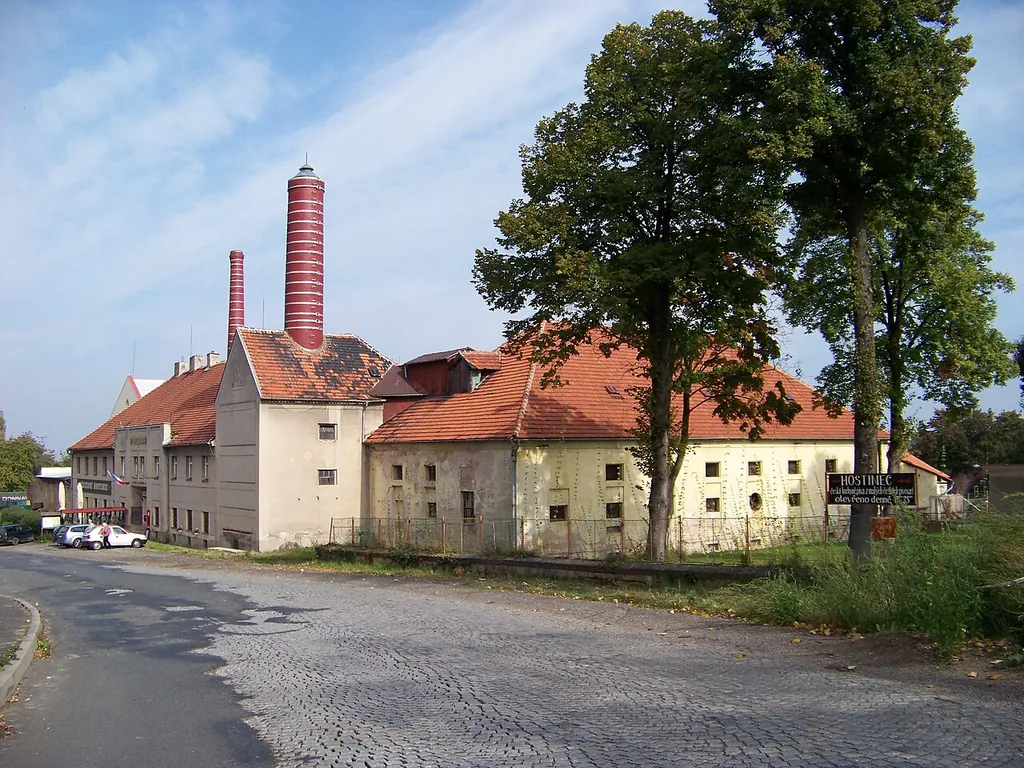
The brewing tradition in Kostelec nad Černými lesy goes back to 1498, when King Vladislaus II elevated Kostelec to a market town and allowed it to brew beer and produce malt. After a fire destroyed the old castle brewery in 1836, a new late Baroque brewery was built in 1839–1841. In 1873 it was largely rebuilt, in 1897 it received steam power and a chimney, and in 1924 a joint-stock company of local innkeepers bought it from Prince John II of Liechtenstein.
The largest modernisation took place in 1931–1932, when most of the equipment preserved today was installed, including a new brewhouse and cooling tubs. After nationalisation in 1948 the brewery gradually reduced production, and in 1974 the Černokostelecké pivo brand ended.
In 2001 Milan Starec and Tomáš Vodochodský bought the closed brewery and began restoring it. In 2007 they founded the non-profit organisation Národní muzeum pivovarnictví o.p.s. (National Museum of Brewing, public benefit company), and in 2009 the brewery resumed beer production in a mini-brewery. Today the museum presents brewing technologies of the Industrial Revolution on an area of about 4,000 m², from the malthouse through the brewhouse and the fermentation cellar to the cellars and the cooperage. The project also includes a database of around 4,000 historical breweries in Bohemia, Moravia and Silesia.
Highlights
- largest surviving wood-fired brewhouse in the world
- the only surviving shower-type wort cooler in the Czech Republic
- ammonia cooling compressor from 1936 in the artificial refrigeration engine room
- Žentour mill, cooperage and ice elevator
- tour of the malthouse, brewhouse, fermentation cellar and cellars with a beer tasting
Permanent exhibition
- Expozice pivovarských technologií – The tour, covering about 4,000 m², presents 34 technological units from the malthouse through the brewhouse and the fermentation cellar to the cellars and the cooperage.
- Founded
- 2007
- Operated by
- Národní muzeum pivovarnictví o.p.s.
Admission & discounts
| Adults | 250 Kč |
|---|---|
| Reduced | 190 Kčpensioners and children over 6 years of age |
| Children & teens | 190 Kčfree up to age 5 · Children under 6 enter free. |
| Seniors | 190 KčPensioners. |
| Groups | –Individual and group offers can be arranged. |
The price of the basic tour includes a beer tasting. Tickets are bought online with a choice of tour time.
Accessibility
- Wheelchair accessible: no information
- Elevator: no information
- Accessible restroom: no information
- Accessible parking: no information
- Service dogs welcome: no information
- Tactile models & exhibits
- Sign language tours: no information
- Easy-to-read materials: no information
- Audio description: no information
Since January 2026 the museum has made its exhibitions accessible to people with limited mobility and orientation (deaf and hard-of-hearing visitors, seniors) through light, sound and tactile features. A tailored tour must be arranged in advance (Ing. Jaromír Fiala, Ph.D., tel. +420 736 218 250). The route includes steps and slippery surfaces, and sturdy footwear is required.
Kids & families
| Kids’ admission | free up to age 5 |
|---|
Children under 6 enter free, children over 6 pay CZK 190. The experience can be given as a gift voucher.
Getting there & parking
By car
Parking available
Parking is possible on the brewery grounds.
Amenities & dining
- Restaurant
- Museum shop
On the site there is a brewery restaurant with traditional cuisine (open daily 11:00–23:00) and a mini-brewery; the visitor centre sells gift items.
Events & venue rental
The museum hasn’t published any information on this.
Plan your visit
| Guided tours | yes · approx. 1.5 hrs |
|---|---|
| Audio guide | yes (CS, EN) |
| Good to know | The tour is led by a guide in Czech; an electronic guide in English and interactive content for smartphones are also available. Animals are not allowed in the museum; outside the summer season warm clothing is advisable. |