Osservatorio astronomico d'Abruzzo
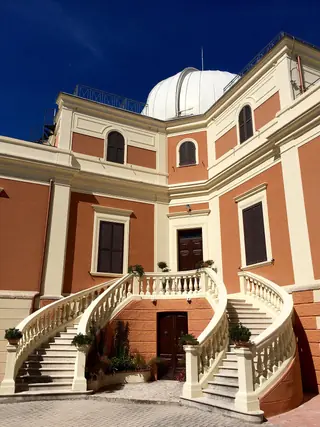
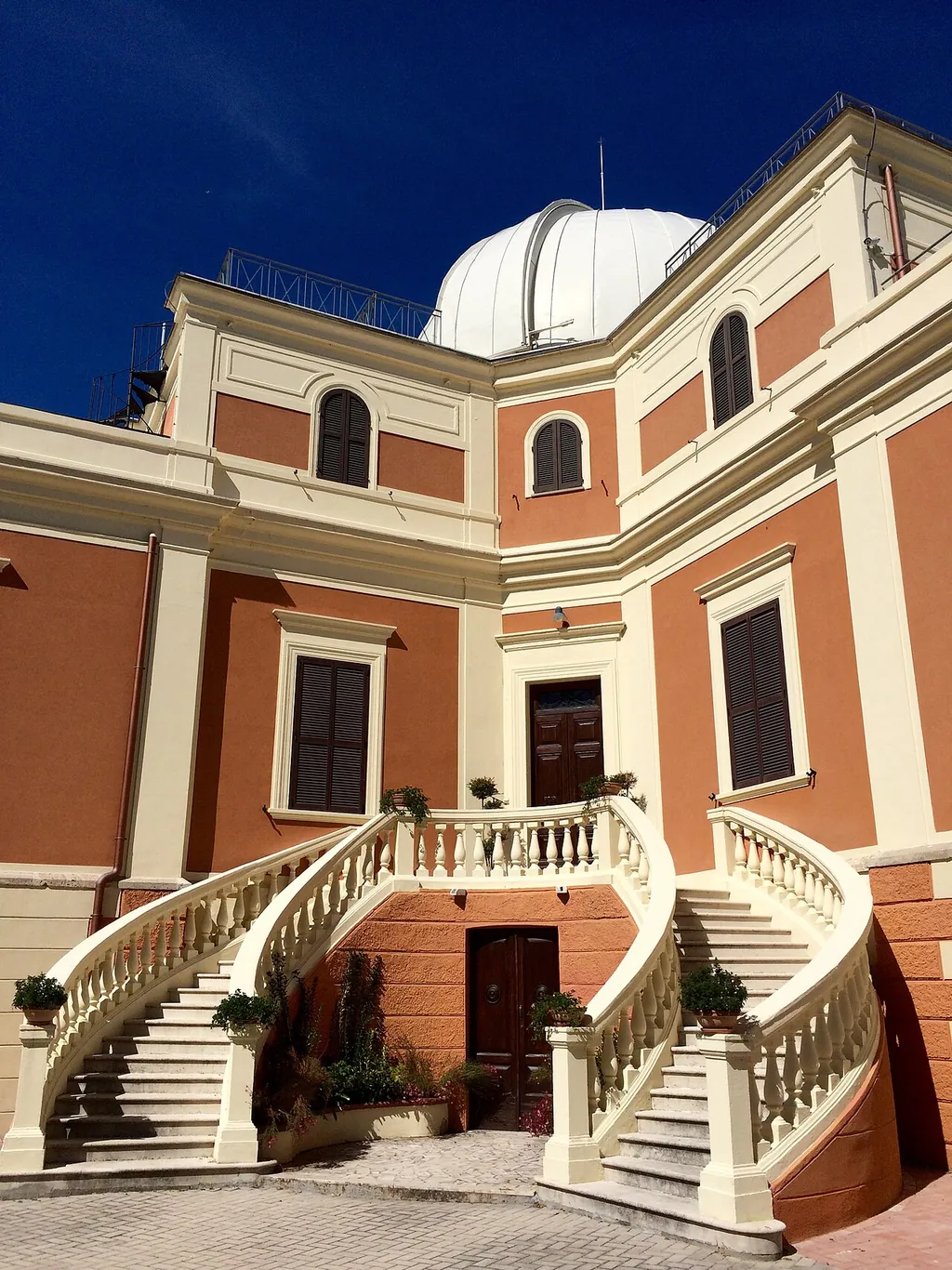
INAF Collurania Observatory in Teramo, with a museum of historic astronomical instruments from the late 19th century, visitable with guided tours.
Have only individual sections read aloud
About the museum
The Collurania observatory was founded at the end of the 19th century on the initiative of a private citizen, the astronomer from Teramo Vincenzo Cerulli (1859–1927). He built it far from inhabited areas, where the sky was clearer, and equipped it with a Cooke telescope. In 1917 Cerulli donated the observatory to the State on condition that it always be devoted to the independent study of astronomy; the government accepted the gift in 1919 and named it after its founder.
After Cerulli's death the direction passed to Giovanni Zappa and Luigi Taffara and, from 1926, to Mentore Maggini, who introduced interferometry and photoelectric photometry. After 1956 the direction was moved to Naples, and only in 1987 did the observatory gain its autonomy. At the beginning of the new millennium it became part of the Istituto nazionale di astrofisica (INAF), and in 2017 it joined the observing station of Campo Imperatore, giving rise to the Osservatorio astronomico d'Abruzzo.
The observatory houses a Museo dell'Astronomia displaying instruments used by astronomers from the late 19th century to the mid-20th century, largely from Cerulli's donation and from the closed Osservatorio del Collegio Romano. A thematic route guides the visitor; information cards can be consulted by QR codes and NFC tags on a dedicated Wi-Fi network, and an app provides augmented reality content. A historic archive and a library are also kept here.
Highlights
- Museum of Astronomy with historic instruments from the late 19th to the mid-20th century
- Cooke telescope of Vincenzo Cerulli
- Information cards with QR codes and NFC on a dedicated Wi-Fi network
- Augmented reality content via app
- Historic archive of the observatory
Permanent exhibition
- Museo dell'Astronomia – Historic astronomical instruments dating from the late 19th to the mid-20th century, largely from the donation of Vincenzo Cerulli and from the Collegio Romano, with a thematic route and digital information cards.
- Founded
- 1893
- Operated by
- INAF – Istituto nazionale di astrofisica
- Visitors per year
- approx. 1,200
Admission & discounts
The museum hasn’t published any information on this.
Accessibility
The museum hasn’t published any information on this.
Kids & families
The museum hasn’t published any information on this.
Getting there & parking
By public transit
Specola-Osservatorio
Teramo–Villa Vomano bus line run by Autolinee TUA, only trips with the stop “Specola-Osservatorio”.
The observatory is about 4.5 km from Teramo, on the SS81 towards Villa Vomano (km 39); from the centre of Teramo the simplest way to get there is by taxi. From the A24, take the Teramo-Ovest exit; from the A14, take the Teramo/Giulianova toll gate and the Teramo-Mare expressway as far as Teramo Ovest.
Get directionsAmenities & dining
- Wi-Fi
A dedicated Wi-Fi network is available in the museum, allowing the information cards on the instruments to be consulted (QR codes and NFC tags).
Events & venue rental
The museum hasn’t published any information on this.
Plan your visit
| Guided tours | yes |
|---|---|
| Audio guide | no |
| School programs | yes |
| Good to know | Access is by guided tour; a calendar of school visits for the 2026–2027 school year is published. An app for smartphones and tablets with augmented reality content is available. |